Tag: welding classes



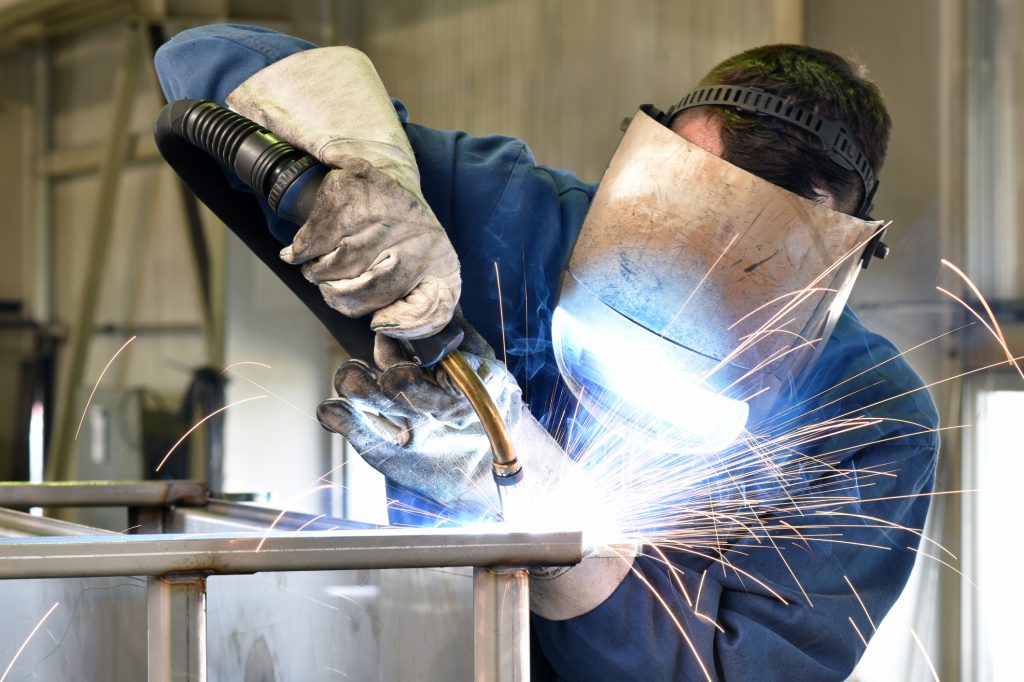
If you’re considering a career in welding, it’s more than likely that you’ll be using the 7018 welding rod for various welding purposes. The type of welding rod used for a project depends on the material being used and the requirements of the job at hand. Welders must consider factors such as corrosion resistance, tensile strength, polarity, weld position, and more. A common type of welding rod is a welding electrode, a coated metal wire composed of materials that are consistent with the metals being welded.
There are many different types of welding electrodes, which come in different levels of coating and different sizes. Here, we’ll take a look at the 7018 arc welding rod, an electrode commonly used by welders for a number of purposes.
An Introduction to the 7018 Welding Rod for Welding College Students
The 7018 welding rod is a consumable electrode rod, and is typically used for welding carbon steel. The iron-based flux compound coating this electrode is characterized by a low hydrogen content, setting the 7018 apart from other welding rods. The 7018’s minimal amount of hydrogen allows for a weld that is both tough and resistant to cracks–making it a great option for a number of projects. When welding, its flux compound vaporizes, keeping moisture, hydrogen and air from contaminating the weld bead.
As those with welding technician training will come to learn, the 7018’s numbers can be used to understand its function, as with any welding rod. In the 7018, the “70” dictates its tensile strength, which is equal to 70,000 lbs per square inch. The third digit, the“1,” denotes the welding positions that the 7018 can be used for. The number 1 means that the 7018 can be used for any welding position. The “8” signals the electrode’s coating type–the kinds of current which can be used, and its penetration. In the 7018, the “8” shows that it’s composed of a low-hydrogen flux compound, which allows for a medium-penetration weld compatible with AC, DCEP, and DC currents.
When Do Welders Use the 7018?
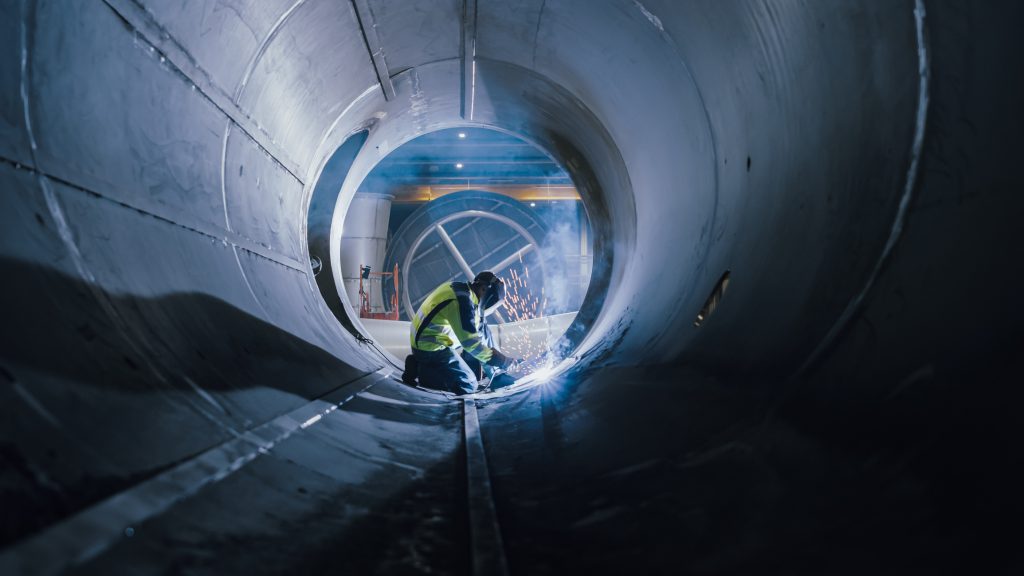
The 7018 has a wide range of applications, making it a popular choice among welders for a number of projects. Not only can it be used in any welding position and with a number of different currents, but it produces a relatively steady arc with a low quantity of splatter. The 7018 is used mostly for structural welding due to the strong and ductile weld it produces, and its versatility qualifies this rod for a number of different applications. In addition to structural projects such as high-rise buildings, dams, and bridges— which benefit from the high degree of strength characteristic of the welds created by the 7018—this electrode can also be used to weld pressure vessels, pipes, boilers, and other powerful equipment.
If You’re in Welding Technician Training, Here’s How to Use the 7018
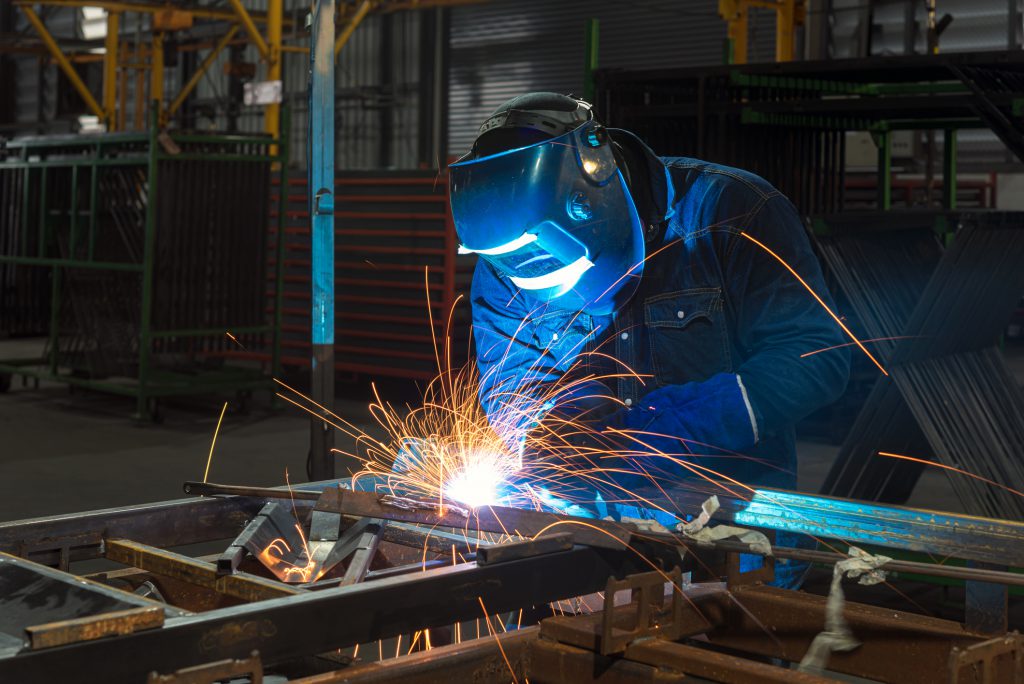
When welding with the 7018 electrode, it’s important to follow a few requirements. First, welding students should make sure to use the correct welding amperage. The right amperage depends on the diameter of the rod in use, which is determined by the thickness of the steel being welded. When using a 7018 welding rod, the welding pro should keep in mind that the strength of these welds tends to make them solidify more rapidly. This welding rod is a consumable electrode–meaning it gets shorter throughout the welding process. Thus, welders should be careful to continuously keep a consistent distance between the electrode’s tip and the metal while concentrating heat at the joint of the weld. The 7018 should be dragged along the metal to ensure that the filler material is secure. With experience, welders will be able to feel when the weld is firmly fixed.
Learning how to use the 7018 takes some practice, relying upon the level of knowledge that can be gained from the right type of welding college program. The North American Trade Schools’ welding program allows students to gain the hands-on training necessary to become skilled experts in the industry. For Welding Graduate Emily Harrison, her “favourite thing about the campus was the knowledge of the teachers and how much practical work you were able to do. It was very helpful.”
Are you ready to learn from the best?
Explore welding classes at NATS today!
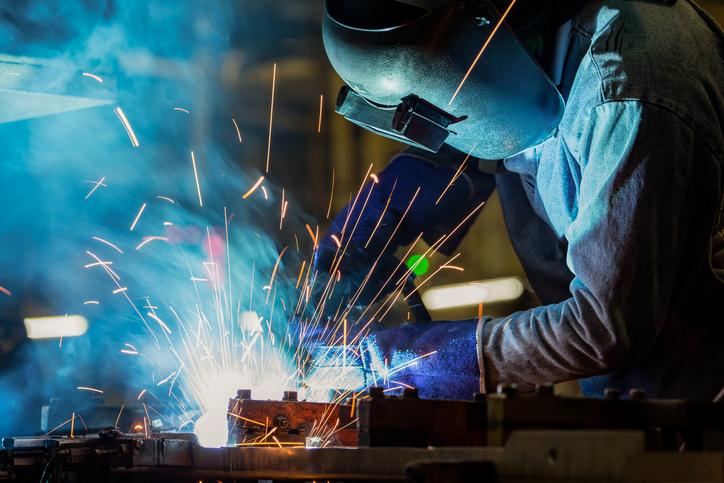 Both MIG and TIG welding are procedures that use electrical arcs to create enough heat for melting down metals into liquids. Both methods use filler material to join metal pieces together, and inert gas is also used to prevent welding electrode corrosion for both procedures. Despite these similarities, these welding types remain quite different in their approach, and with different purposes for their use.
Generally speaking, MIG welding is a good low-cost bet for completing jobs on steel and aluminum quickly, whereas TIG welding is typically reserved for more expensive, high-quality, and precise jobs–requiring more training to master and taking a lot longer to complete.
For a better understanding of which welding type to use and when, let’s take a closer look at both of these processes!
What Is MIG Welding?
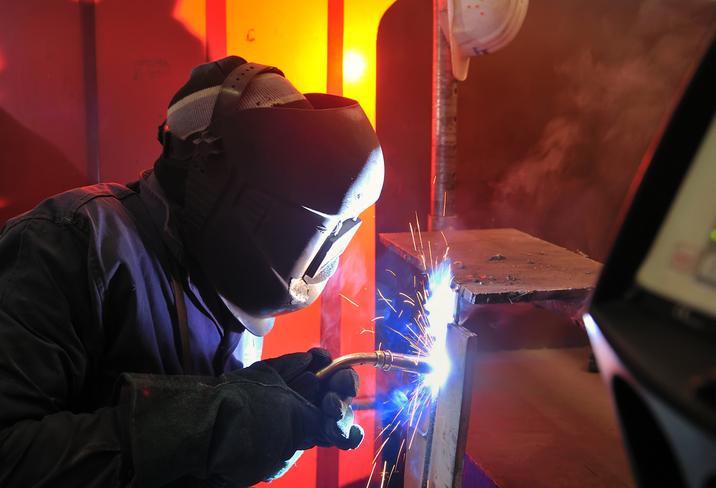
This type of welding is often called ‘point and shoot’ welding due to its similarities to aiming and pulling the trigger on a gun. Metal inert gas (MIG) welding works by feeding metal wire continuously from a spool connected to an electrode into the weld–with wire being used to join the two metal objects together as a filler material.
An electric current flows through the filler wire to produce an arc. While it’s touching the metal being welded, the arc is generated. With this short-circuit welding process, you move the gun at a steady speed along the joint upon starting the arc until the job is done.
Pros with welding technician training may know that MIG welding is effective on many thicker types of sheet metal. It’s also a lot easier to pick up as a trade, and a faster process than the more precise art of TIG welding.
What Is TIG Welding?
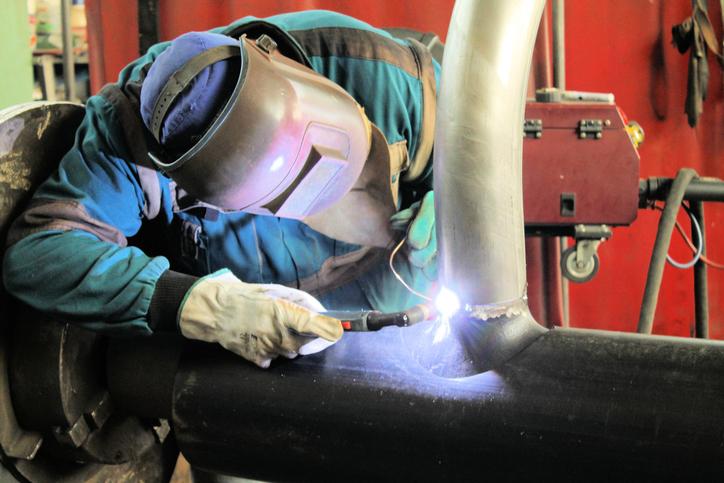
If you’re interested in attending welding school, you’ll eventually hear about the more finicky art of tungsten inert gas (TIG) welding. Here, the metals you’re looking to weld together need to have a tungsten electrode running a current through them. Once the metals have been liquefied by the heat of the electrode, you join the pieces together by putting filler material into the weld puddle.
Unlike the one-handed use of a MIG welder, TIG welding requires both of your hands for the filler and the torch, since they are separate here. You control the electricity coming to your torch via a foot pedal, which allows for a level of deep penetration and accuracy that prevents the arc weld splatter that can result from a more basic MIG job.
In order to feed the wire, you must have a steady hand and stay extremely focused while moving through the weld. The level of control made possible by this procedure allows for a much cleaner weld—perfect for high precision, more advanced jobs. With TIG welding, you don’t even necessarily need filler material to get a successful join.
How to Decide Which One to Use After Welding Technician Training
With any weld job, looking at some key components of the work at hand will help you decide whether to use the MIG or TIG approach. Cost is your first consideration, with TIG jobs typically being much more time consuming, and therefore more expensive to complete. To execute fast and low-cost jobs, MIG is best.
The thickness of the metals you wish to weld is next on the list, with MIG welds generally being much more effective on thicker, bigger pieces of sheet metal than TIG. Finally, you should consider the aesthetics of the job. Welding requiring any filler material is usually a messier procedure. The precise metal-to-metal welds that TIG welding can enable is splatter-free, allowing for the smooth, neater surface you’re looking for.
When talking about MIG and TIG welding, it’s really not possible to say that one type of welding is definitively better than another. Both procedures are necessary in the world of liquefying and joining metals, and both take a good deal of training to master—with MIG being the more basic starter skill that can later lead to performing the more precise art of TIG welding.
Are you interested in pursuing a thriving career by taking professional welding classes?
Contact North American Trade Schools today for more information on its exciting welding diploma program!
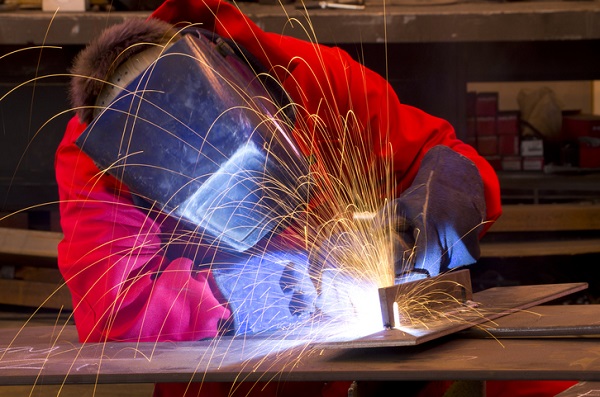
A professional welder is able to master multiple welding techniques specific to different metals and industries. Flux cored arc welding (FCAW) is a variant of arc welding and is often used to join heavy steel plates together.
FCAW differs from other welding processes as it can be done outside with minimal equipment and produces impressive results. It is one of the fastest manual welding processes and can produce more than 25 lbs of welded metal per hour. By comparison, gas metal arc welding (MIG) generates substantially less.
Read on to learn more about FCAW before practicing it for real in the workshop!
Learn How Flux Cored Arc Welding Works at Welder School
Similar to MIG, FCAW involves joining two pieces of metal together using heat. An electrode is continuously fed through a welding gun onto the joint. The electricity short circuits to generate heat, or an ‘electrical arc’, that causes the electrode to melt. This forms a molten puddle that joins the metal together when it cools.
Flux cored differs from other welding processes as the electrode contains a flux compound and shielding gas, which is released when heated. Shielding gas is normally made up of carbon dioxide or argon carbon dioxide, which protects the weld pool from contamination by oxygen or water vapour. This is normally added externally, however, in FCAW it is released automatically in a process called ‘self shielding’. Taking welding classes will teach you even more about these different aspects.
The Difference Between Self Shielding and Dual Shielding
There are multiple versions of FCAW, including self shielding and dual shielding. In self shielding, no external protective gas needs to be applied, as the gas released from the electrode is enough. This means that welding can be performed outside without concerns about windy weather contaminating the heated pool.
By contrast, dual shield welding uses an external shielding gas as well as the inner shield for extra protection. At welding school, students will gain practical hands-on experience performing these processes in the workshop.
The Advantages of Flux Cored Arc Welding
FCAW is a highly productive arc welding method and can weld large volumes of metal in a short time period. The electrode is continuously fed through, meaning that the operator does not need to stop and start to introduce a new electrode. Because of this, it is a common technique for welders working in the construction and maritime industries and who usually work with large, heavy metals.
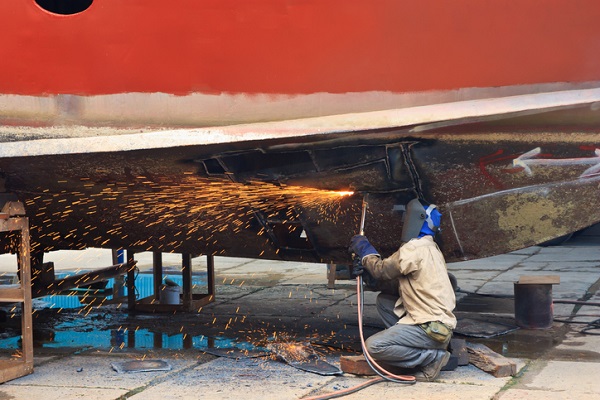
FCAW is one of the only welding processes that can be completed outside. It is less easily contaminated by dirt or rust because of the flux compound, and requires minimal equipment. You do not need a heavy gas bottle, meaning that welders can move around and work outside of a workshop if needed. As well as this, FCAW can be used on mid- and low-alloy steels, stainless steels, and some high nickel alloys.
…and the Disadvantages of Flux Cored Arc Welding
However, there are some disadvantages that come with flux cored arc welding. FCAW produces high levels of noxious smoke, which can make it difficult for the welder to see their work. There is also a risk of the finished metal being porous as gases escape through the metal as it cools.
In addition, the wire and filler in FCAW is more expensive than in other arc welding processes. Lastly, FCAW cannot be used on non-ferrous metal likes aluminium, meaning that it is less flexible than other welding processes out there.
Are you interested in welder school?
Contact North American Trade Schools to find out more!
Finishing Welding Classes? Here’s How You Can Land Your Dream Apprenticeship
December 24, 2019
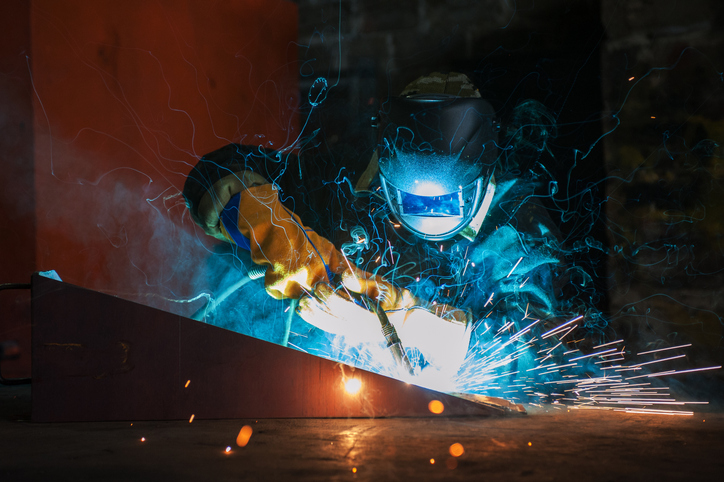
Welding can be a challenging job, but also a rewarding one. Getting an apprenticeship is what helps students on their way from the classroom to a welding career, and gives them the knowledge necessary to move up to journeyman status. Students who love working in hands-on environments can thrive in this type of career, and there are several ways in which they can get the kind of training they want.
Although getting welding training at an educational institution is an essential step in the process, what you do after your schooling is even more important than what you do during it, and getting the best possible apprenticeship can help build a foundation for anyone wanting to work in a skilled trade such as welding. Here are some tips for you to land your dream welding apprenticeship.
Get the Right Welding Training, Both in and Out of the Classroom
Finding the right apprenticeship opportunity can begin with the right training program. In Canada, apprenticeship programs vary between provinces, but they often require classroom time during a span of six to eight weeks per year, as well as paid, on-site training between two and five years. For welding specifically, the combination of classroom time and on-the-job training amounts to about 6,000 hours, or around three years.
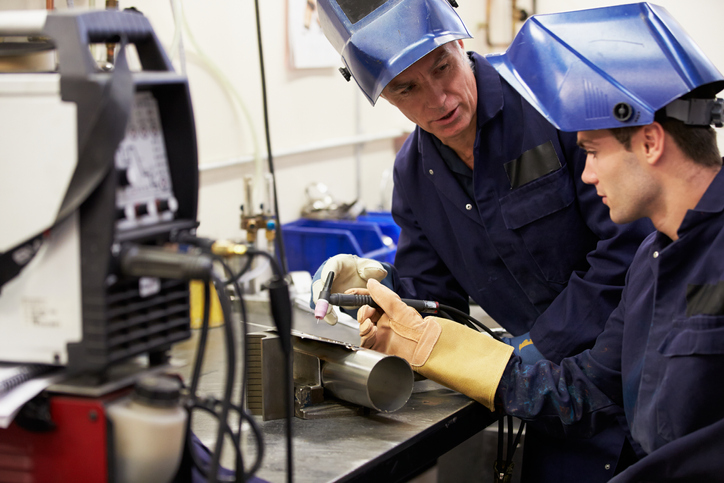
Whilst in school, students can learn various aspects of the trade through their welding courses. For example, the Structure & Pressure Vessel Welder diploma program at North American Trade Schools can teach welding students about concepts such as positional welding, blueprint reading, electrodes, consumables, and various welding processes.
How On-Site Training Can Give Students the Tools They Need for Success
Anyone hoping to have a career in welding in Ontario must become a member of the Ontario College of Trades, and must remain part of the College throughout their apprenticeship. As an apprentice on the job, students will be given instruction from a skilled worker, and the apprentice’s sponsor is tasked with signing the parts of the training standard demonstrating that the apprentice has met all necessary training requirements.
Apprenticeships can also pave the way for students to get good-paying jobs after their training. Apprentices get paid in the meantime so they can earn and learn at the same time. 90 per cent of the training for an apprenticeship takes place on the job, and the student will need to find a sponsor who can help provide them with the necessary training.
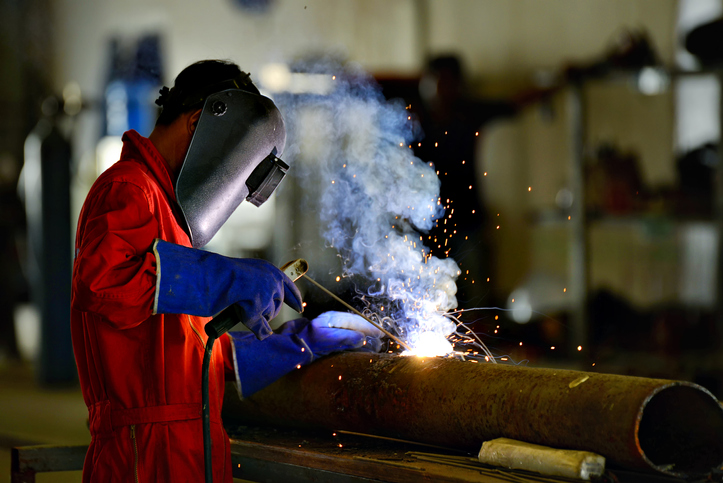
What a Student Needs to Do to Get the Most Out of Their Apprenticeship
Students should research various welding training programs, and call the schools to get more information on what each offers. Similarly, they can reach out to businesses offering apprenticeships or other welders to get tips and insights on how to get the apprenticeship they want after their welding courses. Since many training facilities are in close contact with companies hiring welders, they can work together to offer the best possible apprenticeship programs to students.
Furthermore, the length of an apprenticeship can be determined by how much prior work experience and classroom education the apprentice has under their belt. NATS’ welding diploma program also teaches students about searching for jobs, crafting resumes, and what they can expect during an interview for a job in welding to help them land an apprenticeship.
Want to attend welding classes?
Contact North American Trade Schools for more information!