Author: toppyhem
Considering Electrician Training? 5 Benefits of Being Your Own Boss
June 08, 2021



After completing their training and gaining a few years of experience, many electricians choose to open their own business. While starting your own business comes with its own set of challenges and hard work, there’s a reason that so many electricians choose to take on this endeavour. Opening your own electrician business can be extremely rewarding, and nothing beats being your own boss.
If you’re considering whether it’s worth it to start your own electrician business, read on to discover five benefits of this exciting venture.
1. If You Start Your Own Business After Electrician School, You’ll Have More Independence
While working for another contractor can offer stability, owning your own electrician business offers an appealing level of freedom. You can choose what jobs you take, and you’ll be in charge of making your own decisions about a project based on your personal assessment. When you open your own business after electrician training, you’ll also be able to decide which services to specialize in. Not only does this level of independence offer you more freedom throughout your career, it also allows you to define your approach to business on your own terms.

2. When You’re Your Own Boss, You Have More Flexibility
It’s often difficult to find a work-life balance throughout your career. For many electricians employed by a company, their schedule is dictated by the demands of their superiors, giving them less flexibility in their day-to-day lives. Opening your own electrician business allows you to make your own schedule, giving you the opportunity to take time off when you need it and leading to more flexibility. Only want to work four days a week? Starting your own electrician business gives you the option to structure a schedule that allows for it.
3. You’ll Potentially Have the Opportunity to Earn More
While most electricians can’t complain about their salary, there are limits to what an electrician can make by doing contracted work. If you decide to start your own business after electrician school, you’ll be able to enhance your own success by setting your own prices. As your business grows, you’ll see the financial rewards increase too.

4. You Have the Freedom to Innovate
After gaining some experience as an electrician, it’s likely that you’ll notice a few processes and procedures which could be improved upon. Although you might not have the opportunity to make beneficial changes to a company’s policies while doing contracted work, opening your own electrician business allows you the freedom to innovate. You can set your business’ goals, develop your own working standards, and create a system that suits you and your clients’ needs.
5. You’ll Be Directly Impacting People’s Lives with Your Business
Everyone requires the services of an electrician at some point in time. There’s nothing better than the feeling of a job well done, and the look on your clients’ faces when they see the results of the work you’ve completed for them. Additionally, you’ll be able to employ other electricians, making a difference in their lives by providing them with a great job.
Ready to enroll in electrician college?
Launch your career with a program at the North American Trade Schools today!

A career in welding requires skilled professionals with an awareness of health and safety practices. Professional welders often work in extreme conditions involving high temperatures, gases and fumes, electrical voltage, and ultraviolet rays. Knowing how to safely operate industry-grade equipment within that environment is an essential skill.
One of the most common tools in welding is an angle grinder. Grinders are used extensively in the preparation of work to cut, grind, blend, buff, and clean metals. While grinders are a common feature of welding, they still carry a number of safety hazards. That’s why it is important that those in the industry learn how to properly use a grinder in order to minimize the associated risks. If you’re considering joining the welding profession, keep in mind these safety tips when working with a grinder.
Make Sure to Choose the Right Wheel
First and foremost, you need to ensure you have selected the right wheel for the material and application. For example, a grinding wheel should never be used to cut, and a cut-off wheel should never be used to grind. Likewise, using the wrong grinder for your chosen material can cause damage to the wheel. If you were to use a wheel meant for steel on aluminum, the wheel could become clogged and break down during the process. Professionals with welding technician training will be able to identify the designated uses of different grinding wheels.

It’s also important to pay attention to the revolutions per minute (RPM) of a wheel to ensure you don’t exceed the maximum RPM recommended by the manufacturer. While a wheel may fit on a grinder, it doesn’t mean it’s intended for that grinder. You never want to use a wheel on a grinder with a different RPM rating. It’s a good idea to check the label on both the wheel and the grinder before assembling the two parts.
Always Use a Wheel Guard
As a professional welder, you’ll likely use a grinder in a variety of ways and over a prolonged period of time. Naturally, grinders are subject to cracks and damages with extensive usage. It’s important to ensure that a grinder is in good condition before using it, and to properly install the wheel guard.
Wheel guards are used for deflecting sparks and debris away from the operator, and to protect users in the instance that the wheel guard detaches. Grinding wheels are at risk of cracking or breaking, and if this happens, pieces of shrapnel can be sent flying. For that reason, it’s essential to use the proper wheel guard in the correct position at all times. Most guards provide 180-degree coverage, and can easily be adjusted so that the exposed part of the wheel is positioned away from you.

Take Care of Your Space After Welding Technician Training
Students in welding classes can expect to take courses in health and safety, where they learn to create a safe work environment and to minimize general hazards in welding. When using an industry grinder, it’s important to take measures to protect your face and body from harmful materials.
Before starting their work, professionals should wear all of their Personal Protective Equipment (PPE), including safety glasses, a helmet, ear protection, gloves, and aprons. These will protect operators from abrasive particles. It’s important not to wear loose-fitting clothes or jewelry while grinding, and to keep hair away from moving parts.
By preparing yourself for the workplace and remaining mindful of your surroundings, you will be able to perform your job safely, efficiently, and effectively.
Are you interested in welding college?
Contact NATS to learn more about our program!

The exterior of a house can tell you a lot about what to expect from the house itself. If you’re considering a career as a home inspector, it will be your job to assess the condition of the exterior to ensure that the home is suitable for buyers to move into. With a trained eye, you’ll be examining the exterior components for any potential problems or deficiencies–relating your findings to the buyers.
When inspecting a home’s exterior, there are a few potential problems to look out for. Whether it’s a crack in the foundation or a few misplaced shingles on the roof, these seemingly small defects can create bigger issues for buyers down the road.
Read on to discover four exterior home inspection tips that will help you to determine whether a house is acceptable for future buyers.
1. During Your Home Inspector Career, Pay Attention to How Water Is Managed
If water isn’t being routed properly throughout a home’s exterior, this can create big problems in the future. When water is in places where it shouldn’t be, it can cause mold, rotting wood, foundation damage, and other issues. To ensure that a home isn’t vulnerable to water damage, it’s important to carefully inspect the gutters and downspouts of a home during your home inspector career. The gutters should be clear instead of clogged, and the downspouts should be routing water into the storm system plumbing instead of near the foundation of a home. Additionally, check the gutter and downspout mountings to make sure that they’re secure.

2. Always Carefully Examine the Roof
The roof of a home is essential in maintaining the condition of the interior. Roof problems are important to address before buyers move into a home, as they can be expensive to repair. As a home inspector, you’ll want to know how old the roof is, which can give you some context when it comes to the inspection process. To determine whether a roof is in good shape, make sure to climb up to the roof for closer examination. Check to see that the shingles are not loose, misaligned, or missing. Additionally, check all seals to ensure that water cannot leak into the interior. If the roof is in bad shape, this could be a potential problem for buyers.
3. Look Out for Rotting Wood and Other Siding and Trim Issues
The siding of a home can tell you a lot about how the home’s owners have maintained their property over the years. If you have home inspector training, you can examine the siding and trim of a home for signs of wear and tear in a few ways. First, examine the exterior paint for areas of damage. Spotty or missing paint can indicate the condition of the wood beneath it, which could be rotting. Additionally, search the siding and trim for signs of insect or rodent damage. If the siding or trim contains holes or cracks, this could be a sign that it needs replacing.

4. Is the Foundation Cracking? Don’t Forget to Inspect It
The foundation is one of the most important components of a home, as it’s responsible for maintaining the structural integrity of the building itself. As a home inspector, one of the biggest mistakes you can make is forgetting to examine the foundation for signs of stress or cracks. Foundation problems can also manifest in the form of slanted floors or misaligned window and door frames. Check the foundation to ensure that it’s completely stable, as an unstable foundation could result in safety issues for the home’s buyers.
When inspecting a home’s exterior, keeping these tips in mind will help you to make a sound assessment about the condition of a home. Don’t forget to use them throughout your home inspector career!
Ready to become a home inspector?
Get the training you need to launch your career with a program at NATS!
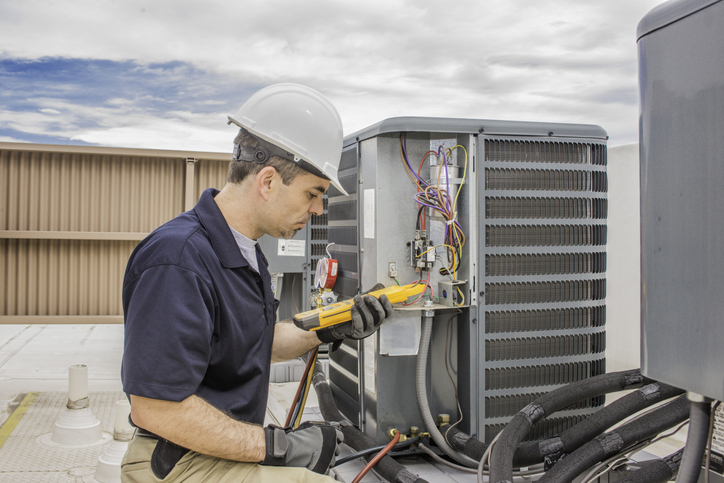
As summer approaches, an air conditioner becomes one of the most essential home appliances. In order to keep cool in hot temperatures, people rely on their AC unit to deliver cold air right into their homes. But what happens when this appliance starts to leak? It’s not uncommon for an air conditioner to develop such a problem over time–especially if it hasn’t been properly maintained or is being used constantly. Air conditioner leakage can occur for a variety of reasons, but the good news is that a leak can almost always be fixed.
If you’re considering a career as an HVAC technician, knowing the most common culprits behind a leak can help you to quickly identify the source of a client’s problem: quickly restoring the flow of cool air within their homes!
Read on to discover six common causes of air conditioner leakage.
1. During Your HVAC Career, Be Aware That a Broken Pump May Cause a Leak
Within an air conditioner unit, the condensation pump is a device that serves to drain water in order to prevent a leak. However, this pump can actually cause a leak if it isn’t working properly. Most pumps are equipped with a float switch, which will turn on when the water gets to a certain level. If this switch has become stuck due to a buildup of debris or scum, it might not work. This lack of functioning can in turn result in dripping water from the unit. If you come across such a situation in your HVAC career, you can try cleaning the switch with bleach. If it still doesn’t turn on, chances are the pump needs replacing.
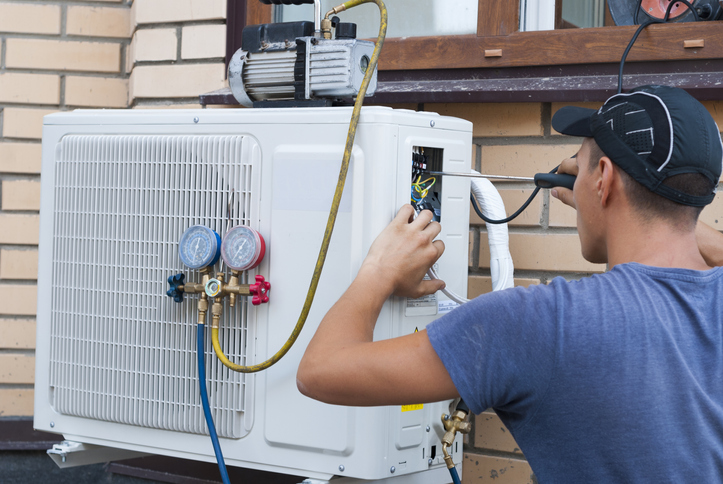
2. Drain Pan Issues Can Cause Leakage
Located beneath the indoor air handler, the drain pan functions as a trap for condensation created by the air conditioner. It connects to a drain pipe, which transfers the condensate outside to prevent moisture buildup around the unit. If the drain pan is rusting, cracked, or overflowing, this is likely to lead to a leak problem. Check the drain pan for leaks by turning off the AC unit and inspecting the pan for signs of rust, cracks, or debris buildup. If the drain pan is the culprit, this component of the air conditioner can easily be replaced.
3. If the Evaporator Coils Are Frozen, Leaking Will Follow
Evaporator coils can be found inside the door of the air conditioner unit. Refrigerant flows through these coils to deliver cool air through the vents. But if the evaporator coils freeze, ice will form and create a leak. These coils may freeze due to restricted air flow, a buildup of dirt or debris, blocked vents, or a lack of refrigerant. When you become an HVAC technician, you can identify frozen evaporator coils by checking whether there is ice or frost within the unit. From there, you can determine the source of the problem by checking the refrigerant levels, filter, vents, and other components to ensure that air is moving properly through the coils.
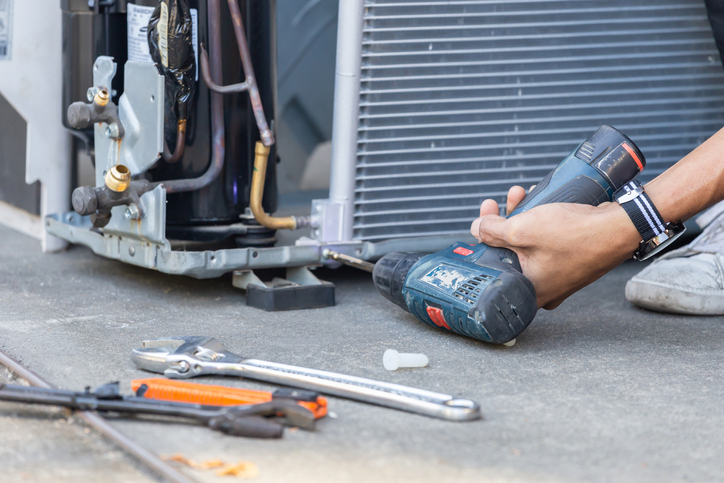
4. An Air Leak is One of the Most Common Problems
When an air leak occurs, air escapes around the vents of the air conditioner rather than through the designated path. This air flow can cause condensation to appear where it shouldn’t, leading to dripping from the AC unit. Air leaks can happen over time if a unit isn’t properly maintained. The good news is they can typically be fixed, simply with caulk, by sealing up the sides of the vent where air is escaping.
5. Look Out for a Blocked Condensation Drain Line
The condensation drain line attaches to the drain pan to transfer condensation outside–preventing leakage from occurring indoors. Over time, the drain line can accumulate debris or be exposed to algae or fungi growth. If the drip pan is overflowing but intact, it’s likely that the source of the leak is a clogged condensation drain line. Luckily, a blockage can typically be fixed by clearing the drain line using vinegar or another solution.
These are just some of the sources of leakage in a home’s AC unit. During your HVAC career, you can refer to these common underlying issues as possible causes when it comes to developing a solution for a client’s leaking air conditioner.
Are you interested in attending HVAC school?
Explore programs with NATS to launch your career today!
In Cabinet Making School? Here are the Best Types of Wood for Kitchen Cabinets
May 11, 2021

Cabinets are an essential and practical feature of any kitchen space. They require a great deal of craftsmanship in order to perfect their structure and design. Cabinetmaking draws upon hundreds of years of woodworking. The job of professionals today is to apply those traditions of the trade with modern tools and technology.
If you’re interested in pursuing a career in cabinetry, you’ll need to have a good understanding of the types of wood most commonly used in the trade and their practical applications. A good cabinet making school will provide hands-on training in woodworking, teaching you how to identify, select, and shape different kinds of wood.
Here is an overview of the best types of wood to use for crafting kitchen cabinets.
Oak is an Option Those in Cabinet Making School Should Know About
Oak is one of the most popular choices for kitchen cabinets, thanks to its classic beauty and durability. If you’re looking for cabinets that will stand the test of time, oak is a great choice. It is an extremely hard and sturdy wood that comes in a variety of shades–from light to dark brown. Students in cabinet making school will find that oak responds well to both hand and machine tools that are used to cut and shape the wood.
When it comes to the aesthetic of kitchen cabinets, oak tends to be associated with older, traditional models. But woodworkers today are applying new finishes to revitalize its use and create more contemporary designs. Although oak is traditionally stained, advancements in wood paint technology are putting an updated spin on the classic grain surface.

Use Maple for Versatility in Design
Maple is another hard wood option, and one of the most versatile in its uses. Much like oak, Maple is readily available and relatively easy to work with–making it a convenient material for cabinetry. With a smooth finish, this wood comes in colours ranging from almost white to cream. Thanks to its fine grain, you can paint, stain, or varnish this wood with high-quality results. Maple is a great choice for those interested in creating a cohesive aesthetic in the kitchen. The colour and texture of this wood allows you to create traditional, contemporary, or modern cabinetry style. They also vary the door form and finish to match the surrounding design elements.

The Timeless Look of Cherry
If you’re dealing in high-end woodworking projects, you’ll appreciate the timeless, classic look of cherry. On the more expensive side, this wood has a rich grain and vibrant colour, which ages over time to a reddish brown once a stain is applied. Cherry is fairly strong and its dark color reduces the visibility of nicks and scratches, making it a solid choice for practical use in kitchen cabinets. Professionals with cabinet making training will appreciate the relative ease of crafting this wood, as it glues well and takes screws and nails easily.
Find Colour Variety in Walnut
Walnut is a hard wood that offers a great deal of variation in terms of grain and colour–ranging from creamy white to dark brown. Although walnut is less readily available than most woods, it is still relatively straightforward to work with, and only needs a light finish to highlight its beautiful natural colour variations. If you choose, a darker finish will create a more classic look. With its colour range, Walnut is a popular choice for kitchen cabinets, and allows for different styles from traditional, to transitional, to contemporary.
Are you interested in cabinet making courses?
Contact NATS today to learn more about our practical program!
5 Tips for Improving On-Site Safety for Professionals in Construction Careers
May 04, 2021

At any construction site, it’s important to take the proper precautions to avoid accidents at all times–especially when dealing with electricity. Electrical safety is one of the primary safety concerns within a construction site due to the risks electricity poses. If you’re considering a career as a construction and maintenance electrician, read on to discover five different ways to improve on-site safety during your career.
1. Those in Construction Careers Should Wear Personal Protective Equipment
Wearing personal protective equipment is the most important step that individuals can take to ensure their safety when working on a construction site. Within an area of electrical work, those in construction careers should wear footwear and gloves. When working in the vicinity of electrical wiring, a worker’s personal protective equipment should also include fire-resistant helmets and face shields in order to provide defense against potential shocks. While the level of protection depends on the amount of electricity a worker is exposed to, suiting up in proper personal protective equipment is always necessary when working on any construction site.

2. Choose the Right Testing Equipment
When working with electricity, using high-quality testing equipment is essential in order to assess the risk involved in any operation. Testing equipment, such as: receptacle testers, voltage detectors, and clamp metres, should be used in order to check wiring. This is to determine whether it’s grounded, dead, or requires safety gear. Using testing equipment is essential in preventing potential electrical accidents.
3. Use Circuit Breakers and Voltage Regulators to Avoid Electrical Issues
Accidents can happen despite taking preventative measures. If you’re seeking a career in construction, it’s important to be able to manage a potential crisis in order to prevent further damage. The best way to respond to emergencies is to use voltage regulators and circuit breakers. These devices will regulate power and protect against equipment damage in the event of a short circuit, a power surge, or another problem.
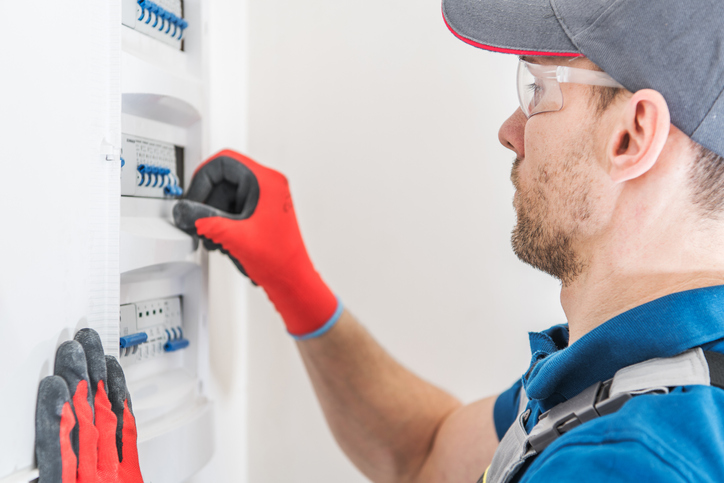
4. Determine Electrical Hazards Through Proper Signage
On a construction site, a lack of awareness of potential electrical hazards may lead to electrical accidents. Project management software can be used to identify and track electrical hazards as they arise throughout the construction process. After the identification process, proper signage should be used to inform workers where electrical hazards are located within a construction site. Signage should include easy-to-read illustrations and language in order to ensure that all workers can understand the present risks. Utilizing proper signage throughout a construction site will improve safety and reduce the danger that on-site workers are exposed to.
5. Never Work in Wet Conditions
Anyone familiar with electricity knows that when water comes into contact with electrical equipment and infrastructure, the risk of electrocution increases. With this in mind, all electrical equipment should be protected against possible exposure to water in a construction site. If water does infiltrate the site’s electrical infrastructure, shutting off the power supply immediately is the best way to prevent an accident.
Following safety protocols can prevent accidents and save lives. In order to ensure the safety of all workers within a construction site, it’s important to incorporate these tips into an electrical safety plan and strictly implement them in practice.
Ready to attend construction college?
Launch your career with a program at the North American Trade Schools today!

If you’re pursuing training in welding, know that there are a range of opportunities that await you in the industry today. Boilermaking, jewel and stonework, plumbing, and transportation assembly are just a few of the common options in this trade. The job market for skilled welders is expanding and now spans a wide range of manufacturing sectors. If you’re looking for a diverse, creative and manually-intensive career, welding offers rewarding prospects.
A great welding program will include both theoretical and hands-on training. Trainee welders can expect to learn about the modern methods and uses of welding, and be ready to apply them to an industry-grade job upon graduating.
To understand more about your options, let’s take a look at 4 surprising facts about this skill.
1. There Are Many Different Types of Welding
As a trainee welder, you’ll practice using a number of different methods. For those without any prior knowledge of the trade, welding school offers comprehensive training to
get you to grips with the mechanics of welding. Welding courses will familiarize you with modern equipment used across different processes to prepare you for practical industry work. At the North American Trade School (NATS), students gain both theoretical and hands-on understanding of major welding methods. These include Gas Metal Arc Welding, Gas Tungsten Arc Welding, Flux Cored Arc Welding, and Shielded Metal Arc Welding. Upon graduating, students often have the chance to apply this knowledge to an apprenticeship as an ironworker, pipefitter, and more.

2. Welding Teaches You Many Different Lessons
As a welder, you’ll master more than just manual and technical skills. It is a trade that teaches resilience, creativity, and organization when working in different settings. Welders are often exposed to smoke, heat, and other harsh substances in their work, while using technical equipment such as drills and grinders. Precision, stamina, and awareness of your surroundings are invaluable skills in this trade. In the NATS welder program, courses cover more than the basics of equipment and the processes of welding joints together. Students also learn the fundamentals of creating a safe working environment, and how to identify and control hazards in welding.
3. Most Man-Made Substances Involve Welding
Over 50% of man-made products today are constructed using welding. From large-scale industrial equipment to automobiles, to personal computers, welding techniques are used in most manufacturing processes. At our NATS welding program, practical lab training teaches students the techniques essential to real-life productions. Over a 55-week program, students at NATS have plenty of access to on-campus labs. Here, they’ll gain first-hand experience of modern equipment, and be ready to apply that knowledge to work in their field. Courses at NATS also teach students how to decipher welding symbols on blueprints and apply basic math to perceive volume, area, and effective part layout.

4. Welding Opens The Doors To Many Career Paths
Welding is a skill you can utilize across many different industries. Technological devices, transport links, and other industrial equipment all require welding to function. Welders can apply their skills to finish making popular consumer items such as toys, computers, and electronic devices. As such, modern production companies have an ever-growing demand for skilled welders. After completing an apprenticeship, trained welders can go on to work in the design and manufacturing of common appliances. A good welding college will offer you the training to support each and every career ambition. Graduates will come away with an experience of technical equipment, modern fabrication methods, and a trained eye for structure and design.
Do you want to learn more about the benefits of a welding career?
Contact North American Trade Schools today!
An Intro to Staircase Installation for Students in Home Renovation Technician School
April 22, 2021

Staircases serve an important function in any home with more than just one floor. Stairs are necessary for moving from one level of the home to another, and they’re often heavily trafficked as a result. When renovating a house, there are many important factors to take into consideration before installing a staircase. Designs can take a variety of shapes and sizes, and there are advantages and disadvantages to the different types of staircases, as well as the materials used. If you’re interested in a career as a home renovation technician, read on to discover what you’ll need to know before installing a staircase.
Useful Staircase Terminology for those with Home Renovation Training to Know
There are a few different terms that are useful to know if you’re embarking on a staircase installation project. First, a riser refers to the section between two stairs. A riser’s height is typically in between 5 and 8 inches. A tread is the term used to describe the horizontal section of a staircase where a person steps—the width of which can vary, depending on the user’s preferences. Headroom refers to the space between a stair and the ceiling above. Building codes will dictate the requirements for the headroom’s height, but it’s usually around 6’8”.

The stringer supports the treads and risers. Finally, the handrail—also known as the railing—is the beam that runs parallel to the staircase to provide balance for those using the stairs. Together, all of these components make up the staircase. If you’re in home renovation technician school, read on to discover how these components can be used in different ways to create a variety of staircase types.
An Overview of Staircase Types
The simplest type of staircase to construct is a straight stairs design. These stairs only need to be connected at the top and the bottom, without requiring additional support in the middle. If there are less than 16 risers, it’s also not necessary to install a landing along with the stairs— making construction relatively straightforward. Another common type of staircase is an L-shaped staircase. Within an L-shaped staircase, a landing marks a change in direction between two sets of stairs, often creating a 90 degree angle. L-shaped stairs are great for installation in the corners of a room, but the work to build them can often be more strenuous for home renovation pros.

Although spiral stairs are less conventional, those with home renovation training may be required to install this type of design at some point in their career. Spiral stairs are more compact, and consist of treads attached to a central pole, radiating out in a helical arc. While these stairs require more careful attention from users when ascending or descending, their interesting design makes them a great option for a modern home.
Use These Materials When Constructing Staircases
When selecting the material you’ll use for a staircase, it’s important to keep in mind: how much the stairs will be used, who will be using the stairs, and what kind of aesthetic you’re going for. Wood is a popular option for use in a staircase. While it’s trickier to install, it can be a great option for high-traffic areas as it’s often more durable. If strength and durability is the goal, concrete or natural stone can be used to construct a staircase—although these materials are most often reserved for staircases on the exterior of the home. Lastly, steel or metal can also be used in the construction of staircases, as these materials are both lightweight and low maintenance.
Want to become a home renovation technician?
Launch your career with the North American Trade Schools today!
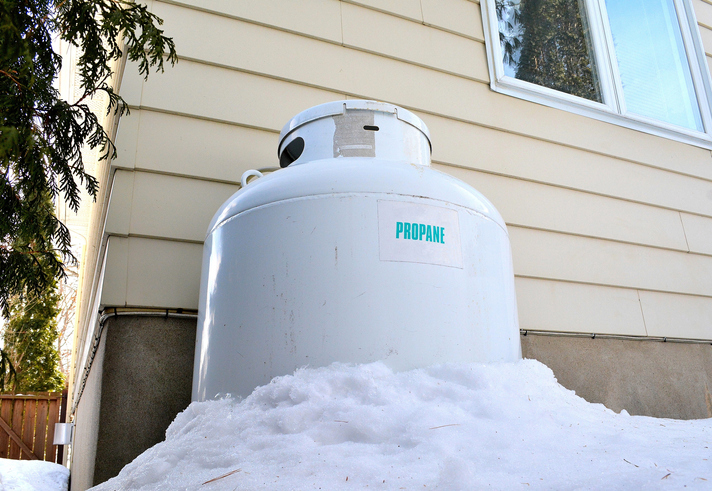 While propane isn’t the most commonly used source of energy for a home, its use has been growing in popularity in recent years. Propane is used to fuel both home-heating furnaces and water heaters. It is also beneficial due to the lower amount of greenhouse gas emissions it produces, as well as its potential as a less costly source of energy. In a propane heating system, propane is stored in a designated tank. This is fitted to a home’s gas line and then transferred to the furnace, which delivers heat to the rest of the home.
Propane is a convenient source of heat for a home, but it’s important to know how to maintain a propane heating system once it’s installed to ensure that it remains safe and effective. If you’re interested in a career as an HVAC technician, read on to discover three tips for maintaining a propane heating system.
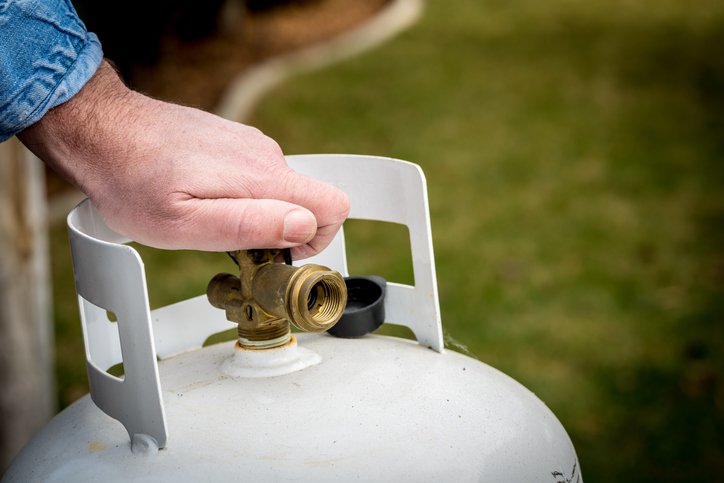
1. HVAC College Graduates Should Pay Attention to a Propane Heating System’s Pilot Light
Most propane heating systems operate through the use of a pilot light, which is a small flame that burns continuously. After HVAC school, it’s important to be familiar with how a propane heating system’s pilot light works in order to properly maintain these systems. In a propane heating system, the pilot light is located at the burner of the heating appliance that the propane fuel is being used for. The pilot light is also responsible for igniting the propane fuel to provide heat.
When maintaining a propane system, check the colour of the pilot light. A pilot light’s flame should be blue in colour. But if it appears to be orange or yellow, the pilot tube may need to be cleaned. Additionally, if the pilot light frequently extinguishes, this could signal a larger problem with the propane heating system. In this case, all connections and tubes should be examined to ensure that there isn’t a leak.
2. A Propane Heating System Needs Regular Service
One of the most important things to know about propane heating systems is that they may require more regular maintenance than other heating systems. A propane tank can be regularly serviced by checking the tank’s fuel gauge. When this gauge indicates that there’s less than 20% of fuel remaining, it’s time for a refill. Additionally, it’s important to examine the tank itself regularly by checking the tightness of the connecting pipes and ensuring that there are sufficient levels of pressure. Make sure that the area around the tank is clear of any forms of clutter. If there are flammable materials in close proximity of the tank, remove them in order to reduce the risk of fire.
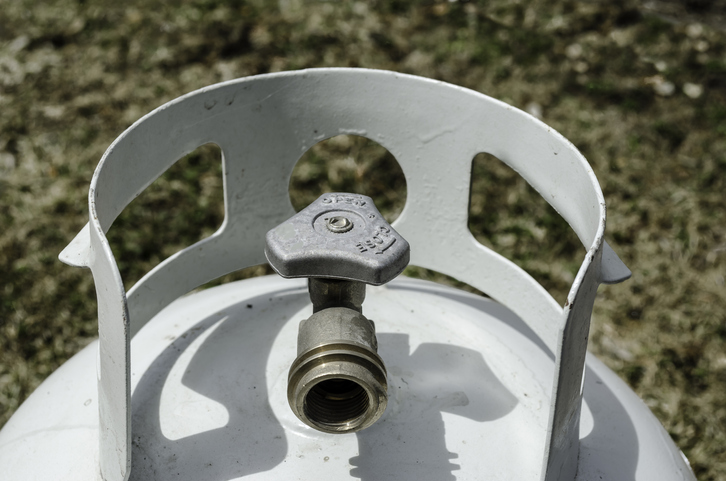
3. Take Measures to Prevent Leakage
While a propane leak is uncommon, graduates of HVAC technician courses should be proactive in preventing leakage. A propane leak can be extremely dangerous, as propane is flammable and can increase the risk of fire within a home. The chances of a leak in a propane system can be reduced by tightening and protecting the propane tank’s fittings. Where the gas line connects to the propane tank, ensure that the connection is properly sealed by using a wrench to tighten the connection. If a leak is suspected, the main gas valve should be turned off immediately in order to safely address the problem.
When properly maintained, propane systems can be an efficient source of heat for a client’s home. During your HVAC technician career, take the above steps to ensure that your client’s propane heating system is working safely and effectively.
Are you ready to enroll in HVAC college?
Get the training you need at the North American Trade Schools. Start exploring today!
Infographic: Things you Need to Know About Pursuing a Career in Home Renovation
April 07, 2021

Home renovation is an exciting choice for study and for a professional path. When you pursue home renovation as a career, you allow yourself to keep learning every day and develop skills that help people, while allowing you to see tangible results from your efforts. Home renovation school equips you with the skills you need to succeed, such as the basics of plumbing, carpentry, and stair construction.
There are some things that end up being very important after home renovation technician training that may surprise you. For example, communication is much more important than many realize, and you may spend quite a bit of your time speaking with homeowners. You also will need to be aware of tasks like record-keeping and managing dust, in addition to the various tasks you are responsible for.
If you’re curious about home renovation as a career and wondering what you need to know before chasing your dream, read on to learn more!
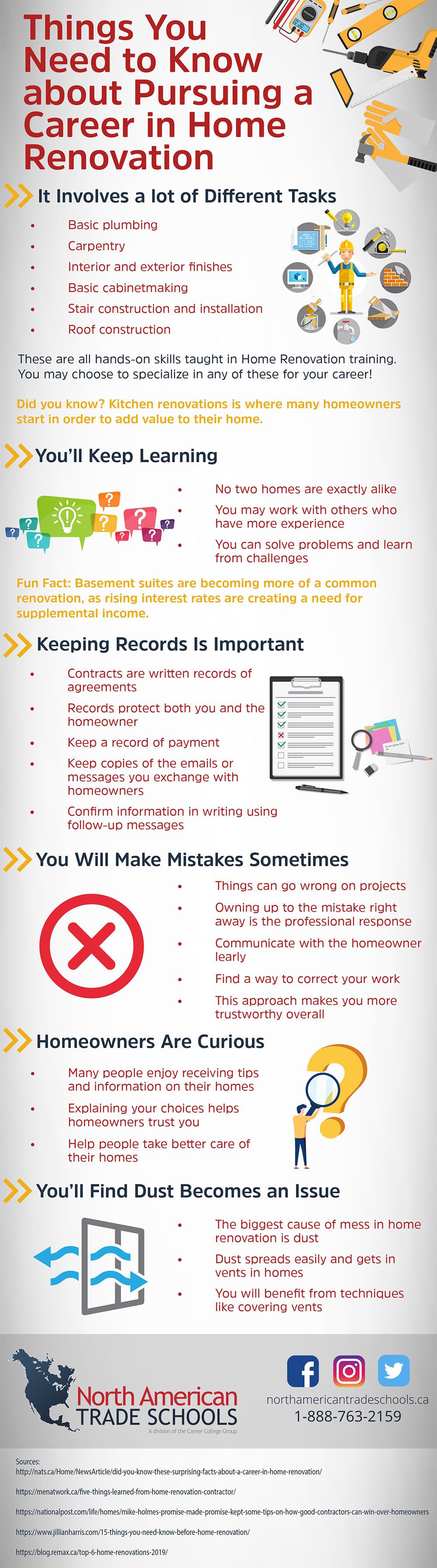
Things you Need to Know About Pursuing a Career in Home Renovation
It Involves a lot of Different Tasks
- Basic plumbing
- Carpentry
- Interior and exterior finishes
- Basic cabinetmaking
- Stair construction and installation
- Roof construction
These are all skills taught through hands-on training in a home renovation program. You may choose to specialize in your career!
Did you know? Kitchen renovations are a place many homeowners start to add value to their home.
You’ll Keep Learning
- No two homes are exactly alike
- You may work with others who have more experience
- You can solve problems and learn from challenges
Fun Fact: Basement suites are becoming more of a common renovation, as rising interest rates are creating a need for supplemental income.
Keeping Records Is Important
- Contracts are written records of agreements
- Records protect both you and the homeowner
- Keep a record of payment
- Keep copies of the emails or messages you exchange with homeowners
- Confirm information in writing using follow-up messages
You Will Make Mistakes Sometimes
- Things can go wrong on projects
- Owning up to the mistake right away is the professional response
- Communicate with the homeowner clearly
- Find a way to correct your work
- This approach makes you more trustworthy overall
Homeowners Are Curious
- Many people enjoy receiving tips and information on their homes
- Explaining your choices helps homeowners trust you
- Help people take better care of their homes
You’ll Find Dust Becomes an Issue
- The biggest cause of mess in home renovation is dust
- Dust spreads easily and gets in vents in homes
- You will benefit from techniques like covering vents