Author: toppyhem
A Peek at the Outdoor Kitchen for Those Interested in Cabinetmaking Training
January 26, 2021



When the COVID-19 pandemic caused most of Canada to go into lockdown last year, many families found that they were cooking at home a lot more than usual. With the option of going out to eat at restaurants off the table for the better part of the past year, people were forced to spend a lot more time in their kitchens. It’s a change that has gotten plenty of families to reconsider the space in which they’re cooking. For plenty of folks at home, the pandemic was an opportunity to invest in some new cookbooks or updated kitchen appliances, while others decided it was time for a new kitchen altogether.
In May of 2020, Google searches for outdoor kitchens almost doubled, as did the search for grills, pizza ovens, and other outdoor cooking necessities. Outdoor kitchens can take many shapes and forms, but the idea is rising in popularity, and it looks like the trend is here to stay. If you’re considering a career in cabinetmaking, now is a great opportunity to learn more about outdoor kitchens and their design.
Those With Cabinet Making Training Should Know What Defines an Outdoor Kitchen
An outdoor kitchen is a functional outdoor space that can serve as a second kitchen in certain homes. While some might call their pizza oven and grill an outdoor kitchen, today, the term can be used to describe a whole range of designs, from simple to luxurious. What an outdoor kitchen looks like might depend on the preferences of the owner. Owners might opt for an island, a grill, an outdoor oven (such as a pizza oven or a wood brick oven), a stovetop, a sink, or even an outdoor bar. Regardless of its design or level of extravagance, there are a few things that should always be taken into consideration when designing an outdoor kitchen. If you have cabinet making training, here’s what you need to know.

Exposure to the Elements
In any outdoor space, an important consideration is how the weather or climate will affect the appliances and materials used. When choosing the right materials for the cabinets and paneling of an outdoor kitchen, consider how the cabinet will fare with exposure to moisture, sunlight, or cold weather. Some good options for durable materials include stainless steel, teak, and marine grade polymer. All of these materials are relatively weather-proof and easy to maintain, making them great options for an outdoor space.

Functionality
An outdoor kitchen doesn’t have to be huge, as long as it contains all the necessary elements. In a functional outdoor kitchen, cabinets should be designed in order to accommodate a range of storage needs. Outdoor kitchens may need more storage, as it’s less likely that owners will be inclined to leave kitchen appliances and utensils resting on countertops in an outdoor space. After completing your cabinet making program, take storage into consideration when configuring the cabinets in an outdoor kitchen. The more storage space that’s available, the less crowded an outdoor kitchen will look.
A Consistent Aesthetic
As with an indoor kitchen, an outdoor kitchen should be consistent in the style and materials used. The use of matching materials and textures makes the space more visually pleasing. Pairing metallic cabinetry with stonework gives the kitchen a more rustic character, while concrete paired with teak cabinetry gives an outdoor kitchen a modern edge. Whatever materials are chosen, it’s important that they work together in order to make the outdoor kitchen both appealing and useful.
Are you ready to enroll in cabinet making courses?
Check out the North American Trade School’s program options to get started today.
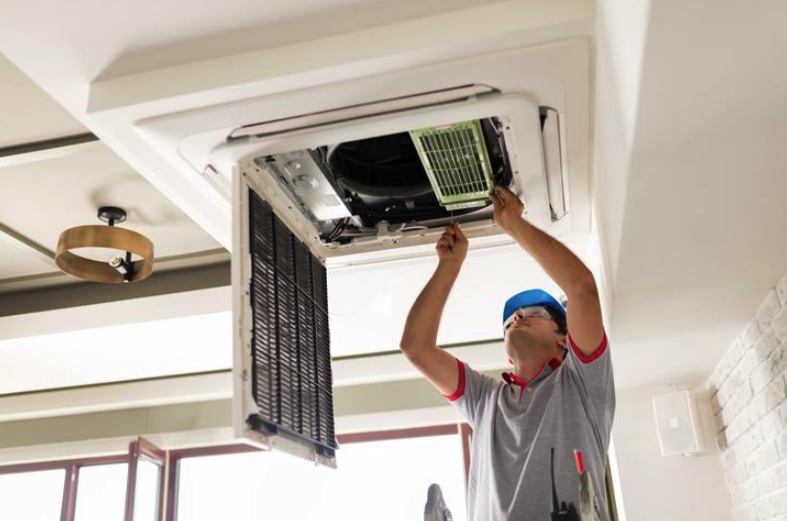 Working within the heating, ventilation, and air conditioning (HVAC) industry is a rewarding career path. However, it takes more than classroom learning to gain the confidence you need to feel comfortable on the job. In order to become successful in this field, it’s important that you also get hands-on training and experience.
Being an HVAC technician is all about knowing how to diagnose a situation and use the correct tools and equipment to perform the task at hand–whether that’s installing, maintaining, or repairing a system. When choosing an HVAC program, make sure that you’re choosing one that offers hands-on training to equip you with the experience necessary to handle all kinds of situations.
Here’s more on why hands-on training is necessary for aspiring HVAC technicians.
Hands-On HVAC Technician Courses Promote Problem-Solving Skills
A good HVAC technician should be able to apply the knowledge they learn in the classroom to real-world situations, and be able to actively solve the problem at hand. The only way to get better at problem-solving on the job is to gain experience at an HVAC college–offering students the opportunity to participate in hands-on training. At North American Trade Schools (NATS), students receive hands-on training in the lab in addition to the information they learn in the classroom. They can expect to work with testing devices and various types of equipment. This helps them to gain first-hand experience with common problems encountered on the job.

Greater Retention of Information
Learning by doing has been proven to be a fool-proof way to remember information. When engaging in hands-on learning, students enrolled in HVAC technician training have the opportunity to familiarize themselves with common materials and equipment of the trade, and get to practice using these tools. Because they’re learning by doing with hands-on training, students are more likely to retain what they’ve experienced, and can easily access and apply that knowledge to situations on the job.
Students Will Gain Familiarity with Safety Protocols
Within this field, there are always risks and safety hazards that may be encountered. Working within the real-world environment offered through hands-on training gives students in HVAC technician courses the chance to practice following safety protocols, and allows them to better understand the risks that go along with the job.
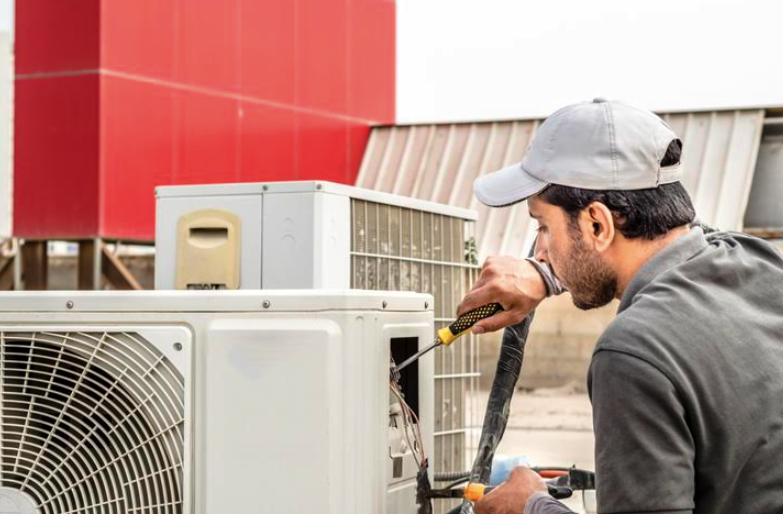
Get Training From Industry Experts
As an HVAC technician student, much of what you learn will depend on the advice and experience of others. It’s important to get hands-on training from experienced teachers in order to learn as much as possible about the field. At NATS, the instructors supervising your training are industry experts. Input from these seasoned professionals proved invaluable to NATS welding graduate Emily Harrison, who said her “favourite thing about the campus was the knowledge of the teachers and how much practical work you were able to do. It was very helpful.”
Receiving hands-on training from experienced instructors will ensure that all your questions are answered, making you that much more ready to tackle on-the-job challenges.
Are you interested in attending HVAC school to prepare you for this role with hands-on training?
Check out program options from North American Trade Schools today.

When smartphones hit the market, everyone seemed to want one. Now more and more people are also upgrading their houses to become smart homes–intrigued by the idea of home automation for an easier and more efficient lifestyle. If you’re interested in electrical wiring, this is a trend you might encounter. These setups can include anything from lighting and temperature automation to security and entertainment systems.
Here’s a quick overview of some key facts about smart home development.
1. Many Start Home Automation With Smart Plugs or Switches
Installing smart plugs or switches is a good way to start the home automation process. Smart plugs allow homeowners to control their smart devices using their phones—or even their voice, if smart speakers are around. Smart switches enable them to control the lighting system much more efficiently. The rise of smart devices makes this an important step, with the wiring process for both switches and plugs being fairly similar.
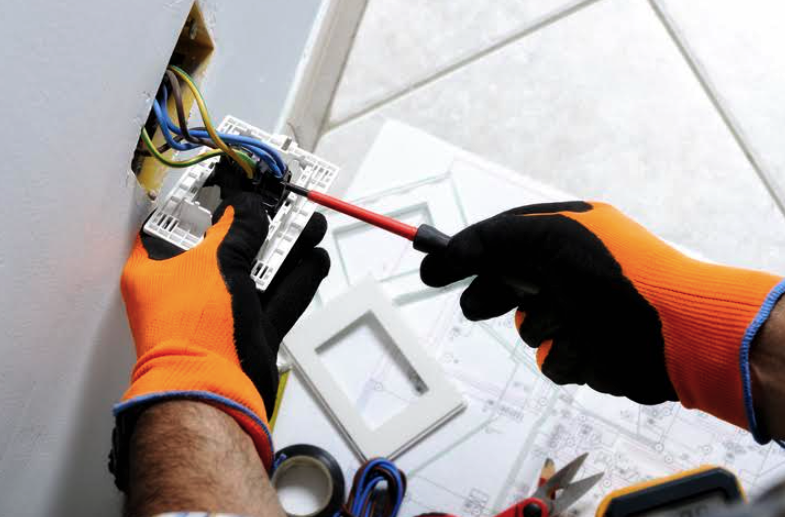
As an electrician, you’ll first unscrew the wall plate and begin disconnecting wires. It’s a good idea to identify all the wires involved—checking for line and load wires as well as neutral wires. Once everything is properly identified and connected, the homeowner can begin integrating smart applications seamlessly into their home. If you want to become a construction electrician, then you might also be looking to install deep junction boxes (where wires meet) during construction as well as in-wall remote control panels to influence lighting groups for a more complex lighting setup.
2. Home Temperatures Can Be Automated by Wiring Smart Doors and Windows
In addition to being convenient, automated doors and windows can help manage a home’s temperature during summer and winter. Smart doors can include automated garage and sliding doors–both of which can be programmed to open at a scheduled time. They can also be wired with extra sensors that indicate security risks (such as unlocked or open doors).
Smart windows can operate in the same way. They can be programmed to open or close depending on room temperature. This can be helpful to homeowners who want easier temperature regulation. As a construction electrician, you might also be interested in wiring a smart thermostat, which should be done carefully as it affects the HVAC system. Smart thermostats can give useful energy reports and control temperatures in different rooms. They also provide other features that could make smart homes a compelling option for homeowners.
3. Those With Electrician Training Can Help Homeowners Set Up Smart Security
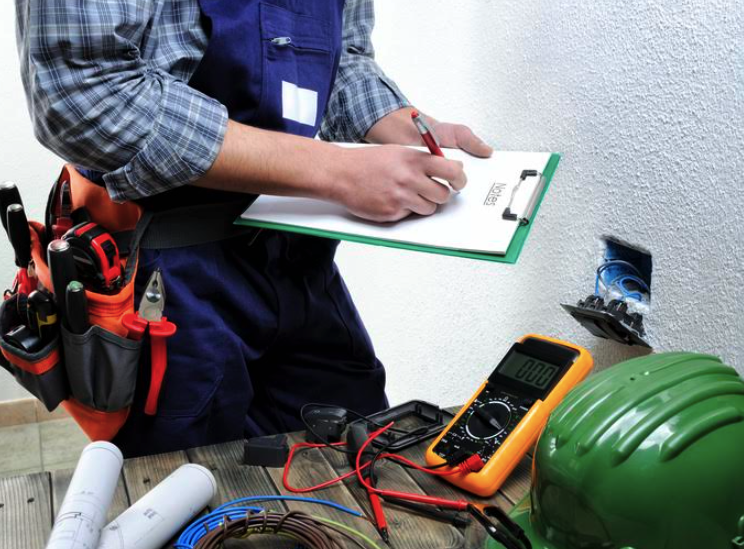
Home alarm systems are a big part of smart home security. Both wired and wireless systems can be used to monitor homes, detect intrusions, and even send notifications directly to an individual’s phone. Wired home security systems are permanent, while wireless systems offer more flexibility and can be easily moved around. This makes the option convenient for homeowners who frequently modify their living space. After your electrician training, you can install home security systems–linking them to motion detectors and security cameras. A wireless setup can be easily hooked into the Wi-Fi network, but wired home security requires a central control panel and some hands-on electrical wiring skills.
The opportunities for smart home development are endless, with options to add smart smoke detectors, video doorbells, and much more.
Do you want to have an electrician career in construction?
Contact NATS for more information!

Looking for a rewarding career that can teach you many new skills and allow you to work with your hands to build and fix things every day? Welding might just be the right choice for you. Should you decide to pursue a career in this field, going to welding school can help set you up for a future in this profession. A great welding training program can teach you about the trade through both a theoretical and practical lens.
Those who pursue welding as a career path can open themselves up to a hugely gratifying profession. Here are some reasons why you should consider welding school to fulfill your career ambitions.
Welding Is a Fantastic Career, Especially if You Have the Personality For It
Are you a patient, creative, hard-working individual who relishes the challenge of working in an intense environment? Welding is a career that caters to exactly these kinds of people. Welders are typically subjected to a large amount of smoke and heat, all while wearing heavy protective gear like coveralls and a mask. This type of work requires a great amount of endurance, as well as the knowledge and instincts to be able to join metal pieces together with the utmost care and accuracy. As a trained welder, you might have opportunities to work in several different industries after completing an apprenticeship, such as: manufacturing, oil, construction, architecture, and more. If any of these job prospects interest you, welding could be a great fit for your professional career.

Taking a Welding Diploma Program Can Teach You Many Lessons About the Trade
If you’re looking for a way to gain the foundational knowledge necessary for success in the welding industry, starting your welding training is your ticket. At NATS, our welding program offers students the opportunity to learn about the trade over 55 weeks. During the program, you can learn about concepts such as welding processes, equipment, safety standards, blueprint reading, and positional welding. Furthermore, students at NATS can use our on-campus labs for hands-on learning. Here, processes like MIG (Gas Metal Arc Welding) and TIG (Gas Tungsten Arc Welding) welding are learned through the use of modern equipment. This helps give students practical, real-world experience before even setting out to work in the field.

You Won’t Need Prior Experience to Get Started in Welding Training
At NATS, some students come to the welding program having already gained a bit of welding practice beforehand. “I chose to study welding, because I did it in high school,” says Emily Harrison, a graduate of NATS’ welding program. “I’m a bit of an artist, and I wanted a little bit more knowledge and a little bit more practicality for the future.”
However, those hoping to attend welding school should also note that they don’t need any prior experience to get into the program. Even without any base knowledge of the trade, taking a welding program can provide you with the training to open you up to various career opportunities, often starting out as an apprentice welder to further sharpen your skills in such roles as ironworker, boilermaker, pipefitter, and more. Not only do you not need experience or a university degree to enter the field, but you also have a wide range of career choices available to you—making welding a great choice for fulfilling your professional aspirations!
Do you want to begin your welder technician training?
Contact North American Trade Schools today to learn more!
Trends to Watch in 2021 for Those With Construction Careers
December 29, 2020

Within the construction industry, businesses are often looking to adopt trends that will cut costs and improve the way that business, and construction itself, is done. Advancements in technology could have a huge impact on the future of the construction industry. In 2020, the COVID-19 pandemic proved that adapting and innovating–while utilizing available technologies–was essential to continuing operations throughout the many disruptions that construction companies and employees saw.
These four rising trends highlight how the construction industry is changing and innovating–as it gives us a sneak peek into what to expect in 2021.
Those in Construction Careers Will Want to Watch for 3D Printing
3D printing is a technology that’s already being used in the construction industry to make custom projects more affordable, as well as to help complete projects at a faster rate. 3D printing is typically used to aid larger projects by building certain smaller components to fit into them. The capacities of 3D printing are still being explored, but those with a career in construction should look for this technology in 2021.
The Use of Big Data
There’s a lot of potential for the construction industry when it comes to big data. Big data is a great tool for construction companies to use to determine and analyze risk. The use of big data allows construction companies to apply algorithms to construction data, sizing a project up against market and material trends, as well as the weather. Construction companies can better manage risk with big data, as they’ll be better informed about the correct amount of resources to use. This will be better equipped for potential losses. The use of big data for risk management increased in 2020, and so there’s a good chance that it’ll continue in 2021.
Prefabricated Buildings and Modular Construction
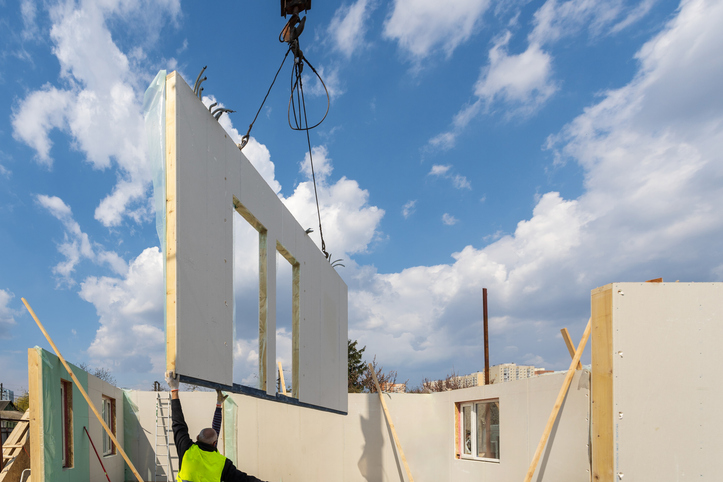
In an era where separate space is increasingly necessary, prefabricated buildings and modular construction have come to flourish. More and more businesses are requiring temporary solutions to the social-distancing requirements and strains which have been imposed by the COVID-19 pandemic. Hospitals need extra rooms, businesses need extra offices, and homeowners might just need another space where they can work from home or decompress. Modular construction and prefabricated buildings are a great option for temporary, efficient, and affordable expansion. This is certainly a trend that could stick with the construction industry, keeping those in construction careers busy.
The Use of Design Technology
Building Information Modeling (BIM), or what contractors sometimes call Virtual Design and Construction (VDC), is on the rise as a means of virtually designing and constructing a building before it is physically built. It allows professionals to see how a building would hold up when constructed, making note of potential pitfalls, budgetary excesses, and more. The increasing use of this technology is helping professionals keep construction costs down and save time. By using BIM, designers are also able to think bigger and bolder in terms of the structures they create. For these reasons, it’s safe to say that the use of these helpful design technologies could continue to expand in 2021.
Are you ready to see these trends in action?
Enroll in construction college at the North American Trade School today.
3 Challenges to Expect After Electrician College, and How to Tackle Them
December 22, 2020

The job of an electrician isn’t easy. Electrical problems are a common occurrence in all kinds of structural installations, requiring anything from a simple fix to a complex solution. If not addressed, electrical issues can lead to electrical shocks, fires, or other unsafe conditions. Electricians are vital when it comes to solving electrical problems as they occur, and knowing how to fix common problems safely is essential to a job well done. Most electrical issues are caused by low-quality parts, a lack of regular maintenance, or failure to comply with codes and regulations. Fortunately, all of these problems can be fixed by a qualified electrician. If you want to become an electrician, then you’ll want to be aware of these three common challenges that electricians often face on the job, and how to handle them.
Those With Electrician Training Should Look Out for Overcrowded Electric Control Panels
Disregarding electrical codes and regulations when putting electrical systems and circuits in place can seriously increase the chances of encountering an electrical problem down the road. Once called in, a qualified electrician should be able to identify and address the problem. One common reason an electrician will be called to the scene is when a breaker or fuse is regularly tripping or blowing. A professional with electrician training will be able to identify the cause of this. Often, the cause can be an overcrowded electric control panel. Too many circuits, breakers, and wires on one control panel can cause overloading, leading to the overheating of components attached to the panel and issues with the fuse and breaker. If left unattended, overloading can cause fires. Electricians can solve this problem by switching to a panel of a larger size, and ensuring that the total load is not above the rating of the breaker or fuse. By being familiar with electrical codes and regulations, this problem can be mitigated.
Haphazard Wiring Methods
If you want to become a construction electrician, one of the main difficulties you’ll encounter throughout your career is incorrect wiring practices. Incorrect wiring practices can be identified by checking power outlets. If they are warm or emitting a burning smell, this is often a sign of faulty wiring. If the wires’ conductors are the wrong size or incorrect connections are used, this can leave wires exposed, causing the insulation to deteriorate and the wires to melt. When exposed wires come in contact with flammable or combustible material, outlets can become warm or emit a burning smell. Electricians can often fix this problem by replacing the conductor with one that is the right size for the wires.
Unsecured Connections
Loose connections refer to an electrical connection that isn’t tight enough, which can cause a buildup of heat and can increase the risk of an electrical fire. A common sign of a loose connection is the frequent flickering or burning out of light bulbs, and can even manifest in a smoke detector going off when it shouldn’t. If the frequency of this occurring is unusual, electricians may suspect that a loose connection is causing the issue rather than the light bulb itself. Loose connections can cause lasting detriment to electrical appliances and can even cause electrical fires. Electricians can solve this issue by cleaning the loose conductors and tightening the connection in concern.

These are just some of the many problems electricians may face during a day’s work, and it’s important to be knowledgeable about the potential issues that can occur on the job in order to safely and effectively solve the problem.
Are you thinking about attending electrician college?
The North American Trade School has the program for you. Start exploring today!

If you value doing a variety of work and are good with hands-on tasks, then chances are that a career in heating, ventilation, and air conditioning (HVAC) could be a great fit for you. HVAC technicians are quick problem-solvers, possessing a solid understanding of mechanical systems and how best to install and repair them. They are relied on whenever the heating dies off or the air conditioner breaks down—and practically every modern building uses either, if not all, of these systems.
Becoming an HVAC technician has many benefits, including the rewarding feeling of a job well done. Here are some reasons why becoming an HVAC technician might be a good idea for you!
Technicians Benefit of Short Training and Fast Results
Starting your HVAC training is key for your success as an HVAC professional. And, unlike lengthy university programs that can take four years to complete, pre-apprenticeship training can be completed in significantly less time.
Pre-apprenticeship training also includes plenty of hands-on work, rather than just sitting through long class lectures. As Jason Boyer, HVAC student at NATS, puts it, “I chose North American Trade Schools because it’s a hands-on school.” He adds, “They have the experience, they have the know-how, and you take what you can from them and apply it to your trade.”

HVAC Careers Include a Variety of Work and Opportunities to Advance
Every day on the job offers the chance to do something new—working in both indoor and outdoor settings while meeting all kinds of different people. This means you’ll have plenty of opportunities to stay active on the job. Each task will contain different challenges for you to overcome, turning every service call into an opportunity for a change of pace. It’s anything but your typical 9-5 office job!
HVAC is a diverse field, offering a variety of work for its professionals. Technicians work with a variety of heating and air conditioning systems, having been trained to install and maintain gas and propane heating systems and ventilation as well as air cooling equipment in residential and light commercial environments. As a result, technicians have room to advance their careers after years of training and earning specialized certifications.
HVAC Is a Highly Valued Service That Comes with Many Rewards
Contrary to what some might think, HVAC work is not seasonal—no matter the time of year, people often need help with their HVAC systems. Due to the nature of the work, technicians need a solid level of mechanical skill and technical ability. HVAC technicians are effective problem-solvers. They have to analyze entire HVAC systems to root out key causes of failure before knowing how to make the necessary repairs. Because the work they do is hands-on, they also get the satisfaction of seeing the concrete results of their actions after a job well done.

An HVAC career is service-oriented, leaving plenty of room for customer satisfaction. Technicians are often met with gratitude as they work to provide valuable service, keeping temperatures well-regulated in all kinds of environments—ultimately providing comfort and security for their clients.
Are you interested in attending an HVAC college?
Contact NATS for more information!
Trends and Features for Home Renovation School Students to Watch in 2021
December 15, 2020
 A brand new home renovation project is an exciting way to start fresh and make new changes, especially with 2021 right around the corner. This year has been full of challenges and surprises, but it gave us a chance to rethink how our personal living spaces work for us—especially now that many people have to work in them as well.
As a home renovation technician, you’ll be able to help make people’s dream homes come true. With valuable skills that range from carpentry and wood (re)finishing to painting and plumbing, you will be better prepared to tackle many future home renovation projects with ease and confidence. So, here’s a quick look at the rising trends and features in home renovation set to get big in 2021.
Creating Calm but Productive Spaces Through Multi-Functional Zen Design
Those doing their home renovation training can expect many different trends to take off in the new year. With the stress of 2020, there’s now an increasing need for calm and comfortable spaces that help us get more done. Typically this means optimizing living spaces so that they serve more than one function while still maintaining a nice and interconnected aesthetic throughout the home. Having a well-designed environment that supports the new work-from-home lifestyle is a key feature that many will look for in 2021.
Multi-functional designs are a great way to create productive spaces–incorporating innovative and adaptable ideas to solve tight storage or address at-home workspace needs. These new changes are often paired with a zen-inspired aesthetic, emphasized by neutral or earth-toned colour palettes and simple minimalistic designs. For instance, rooms would feature more natural light, with window treatments adopting a subtle, down-to-earth style. Accent pieces would come in warm colours, like golden yellow or sage green, and would typically be made with natural materials to give off a warm and inviting feeling.

Adding Depth and Character to Rooms by Including Textured Elements
Textured elements in home renovations are becoming increasingly popular, so students in home renovation schools might not be surprised to see the trend for wood details and woven-style accessories continue in 2021. Various elements can feature these types of textures—ranging from walls and flooring to lighting fixtures and cabinets. This can also be applied to statement pieces that tie the whole aesthetic together, showcasing textile wall art, stoneware pieces, or even canvas paintings.
Alternative materials include wicker, rattan, or bamboo—which are slowly making their way to indoor spaces as well as outdoor ones. These materials are popular for their durability, but they’re also eye-catching due to their unique textures. Having them around would definitely bring a light and airy feel to home renovations.

Using Your Home Renovation Training to Create Eco-Friendly Spaces
Home renovation trends for 2021 will strongly favour eco-friendly and sustainable designs and features. Some of these design features include reclaimed wood, which is now becoming an aesthetic choice as well as an eco-conscious decision—used in ceiling beams or countertops, among other places, to add a rustic and homey look to any room. Green walls, also known as vertical gardens, are set to keep trending. The addition of low-maintenance houseplants can effectively change the atmosphere of a room, especially since some plants can naturally help clean the air around us.
Are you interested in attending a home renovation college?
Contact NATS for more information!
4 Common Residential Electrical Flaws Examined for Those Who Want to Become An Electrician
December 02, 2020
 Electricians called into homes to work on a specific problem have often reported discovering additional electrical issues, some of them potentially hazardous. Many electrical issues in the home are caused by work done by unqualified people, or by homeowners trying to save a few bucks with DIY home reno jobs. Electrical defects are also frequently found in older homes, where outdated fuse boxes, outlets, and wiring are often ill-equipped to supply the power demands of the many modern electrical devices used in the average household of today.
While some of these problems may appear to have harmless symptoms, many of them left unattended have the potential to cause tragic house fires or electrocutions. With that in mind, here are a few of the most common—and potentially hazardous—electrical flaws pros should look out for in people’s homes.
1. Plugs Fitting Loosely in Receptacles
Many homeowners may have noticed an outlet or two in the home where the prongs of electrical devices don’t seem to fit as firmly as they should. This problem is usually caused by the contacts of the outlet receptacle becoming worn over time, causing the plug to sit loosely in the outlet, with the metal prongs of the plug often partially exposed.
Electricity will usually still flow in this circumstance, posing a high fire risk due to loose contacts causing electrical arcing. Any flammable object near the compromised outlet is at risk of igniting, such as bed skirts, curtains, or even an accumulation of dust. While the fire risk is high in this circumstance, the repair work is simple, requiring a quick, low-cost receptacle replacement.
2. An Absence of GFCIs
Ground fault circuit interrupters (GFCIs) are built-in outlet fixtures designed to prevent hazardous electrical shocks. A person with electrician training should be aware of this design, which is usually found in wet regions of the home where electrocution is more likely, such as bathrooms, the kitchen sink area, and outdoor connections. On an inspection, the electrician should look out for GFCIs in these areas of the home, and recommend replacements to older outlet coverings for optimized safety.

3. Overlamping
Even students of electrician school may have at one time or another made the common homeowner error of using a lightbulb with higher wattage than a light fixture is designed to accommodate. It may seem like a small problem, but the mistake rates as a fire risk due to the extreme overheating that will eventually scorch the light socket.

Not only is the socket at risk of melting, but the heat can also burn its way through the fixture’s wires, causing the arcing phenomenon that’s usually at the root of so many electrical fires in the home. Even if the homeowner is lucky enough to avoid a fire from a longer period of overlamping, the light fixture will usually be permanently damaged. To prevent all risk, homeowners should be advised to always ensure they’re using a bulb with the recommended level of wattage limits labeled on the light fixture.
4. Ungrounded Connections
Students of electrician school will need to understand the concept of grounding, which is a safety feature design added to electrical appliances, devices, and outlets to safely discharge an excess of electricity in the event of a wiring defect. If currents escape from the safety of the wiring unit in such defects, connections without a grounding system leave those loose currents at risk of flowing through nearby objects instead. This poses a damage risk to the device in question, and an electrocution risk to the person using it. As a standard safety measure, electricians should highly advise any homeowner with insufficient grounding connections and wiring to invest in an updated installation.
Are you interested in taking professional training to become an electrician?
Contact North American Trade Schools today for more information on its specialized program!
 If you’re someone who enjoys the satisfaction of building something with your own two hands, then a career as a welder might be for you. With their skill set, welders are equipped to build and repair a variety of things, from metal furniture to huge vessels such as ships. With so many things depending on the work of welders, it’s no wonder that welding is a respected and highly skilled profession.
So what does it take to join it? The first step is completing a pre-apprenticeship program before starting your apprenticeship. Here’s a look at what you can search for when making your decision.
Your Welder School Should Offer Hands-On Welder Training
Perhaps the most important thing in choosing a welding school should be whether the program offers hands-on experience. At the North American Trade School (NATS), students benefit from both a hands-on and theoretical approach to welding to ensure that graduates are ready to step into the field with confidence.
Students can gain experience in welding while using modern equipment, building skills in many different welding processes such as Flux Cored Arc Welding, Shielded Metal Arc Welding, Gas Metal Arc Welding, and Gas Tungsten Arc Welding. For welding graduates like Emily Harrison, NATS was a great choice because of “how much practical work [she] was able to do.” Because welding processes can often be complex, it’s important to complete your welding training in a hands-on setting such as the one NATS offers.
All Welders Need Expert Teaching
Welding is a complicated job, requiring familiarity with a variety of safety measures, equipment, and procedures. In order to become a qualified welding professional, it’s important to choose a welding program that will not only equip you with the right certification, but will teach you the techniques and skills necessary to succeed. When choosing a welding program, look for one that prioritizes access to knowledgeable instructors every step of the way. At the North American Trade School, instructors are experts in their fields, and they’ll be able to equip you with the training you need to excel in a wide variety of welding techniques, while following the correct safety procedures. The welder school you choose should offer courses taught by expert instructors in order to prepare you for your career.

During Your Welding Training, Your Instructors Should Be Available to Guide You
Another key component to your welding education should be access to plenty of support from your top-notch instructors. In addition to being experts in their field, your instructors should be there to guide you through welding best practices, processes, and safety protocols, and answer any questions you may have.
Welding graduate Adam Maize says that what he enjoyed most about NATS was “probably the instructors… They were very open to conversation and explaining what to do here.” In a hands-on training environment, instructors who are there to make sure that you’re understanding every step of the process are essential to a solid education in welding.
Are you ready to begin your welding career?
Check out the North American Trade School’s welding program to get started.