Author: toppyhem
Could You Be a Good Foreman After Completing a Construction & Maintenance Electrician Pre-apprenticeship Diploma Program?
January 15, 2024



The career path from a pre-apprenticeship diploma program in Construction and Maintenance Electrician to becoming a foreman is well-trodden. Pre-apprenticeship programs in Canada are essential precursors to diverse careers in the trades. However, this raises an essential question for those looking to explore new career horizons: “Can completing such a program prepare you to be a good foreman?”
Completing a pre-apprenticeship diploma program is a significant first step in becoming a foreman. It provides the technical groundwork necessary for this career. This blog post explores whether completing a Construction and Maintenance Electrician Pre-apprenticeship diploma program helps you become a good foreman.
Understanding the Role of a Foreman
A foreman in the electrical field is much more than just a skilled electrician. They are leaders, planners, and communicators. Foremen are responsible for overseeing the execution of electrical projects, managing teams, ensuring safety compliance, and liaising with other construction professionals. As our electrician courses highlight, this role requires a blend of technical knowledge, leadership skills, and practical experience.

How a Pre-apprenticeship Diploma Program Prepares You for the Role of a Foreman
Gaining Experience: Transitioning from an apprentice to a foreman requires significant field experience. You’ll need to work on various projects, understand electrical systems, and face real-world challenges. This experience is crucial in developing problem-solving skills and practical knowledge.
Developing Leadership Skills: Foremanship is as much about leading people as it is about managing electrical projects. Leadership training, either through additional courses or on-the-job learning, is vital. You need to be adept at motivating teams, resolving conflicts, and communicating effectively, and a pre-apprenticeship diploma program allows you to develop these skills through hands-on training projects.
Understanding Project Management: A foreman needs a good grasp of project management principles. This includes scheduling, budgeting, and resource allocation. A pre-apprenticeship diploma program will introduce these concepts and allow you to master them through further education or mentoring.
Staying Updated with Technology and Codes: The electrical field is continuously evolving. A good foreman stays updated with the latest technologies, tools, and code changes. Continuous learning is a part of the job, and electrician training programs can help develop your love for learning.

Safety First: Foremen are responsible for the safety of their team. A deep understanding of safety protocols and the ability to enforce them is non-negotiable. Pre-apprenticeship programs can introduce you to safety regulations and equip you with the knowledge to ensure full compliance.
How Our Electrician Pre-apprenticeship Prepares You for a Foreman Career
The Construction & Maintenance Electrician Pre-Apprenticeship Diploma Program at NATS offers a well-rounded foundation for aspiring foremen. In our classrooms, students are well-equipped to learn vital skills like residential wiring, service installation, code interpretation, conduit bending, and print reading. Our labs provide hands-on experience in residential, commercial, and industrial electricity, focusing on practical skills such as analyzing and repairing machine controls, electronic controls, and electrical motor theory.
This comprehensive training, which blends theoretical knowledge with practical application, prepares graduates for the multifaceted challenges of a foreman role, ensuring they possess the technical expertise and problem-solving abilities essential in the electrical construction and maintenance industry.
Are you interested in our electrician pre-apprenticeship?
Contact NATS for more information.

A technician is only as good as his tools, so the old saying goes. While an HVAC technician career is notable for its low entry barrier, quality tools are an indispensable expense for budding technicians. As a recent graduate entering the workforce and industry, you may need to manage your budget efficiently, particularly at the earliest stages of your career. One of the first steps in establishing yourself as a capable HVAC professional is assembling a toolkit that equips you for success without breaking the bank. This blog will explore how HVAC technician grads can build a comprehensive toolkit on a budget.
Prioritize Essential Tools While Exploring Budget-Friendly Brands
Start by identifying the essential tools required for your day-to-day tasks. A reliable set of basics includes a quality multimeter, screwdrivers, pliers, wire strippers, and a utility knife. These tools are the backbone of any HVAC technician’s arsenal and should be your first investment. Seek out affordable yet durable options to strike the right balance between quality and cost.
Several reputable brands offer high-quality tools at reasonable prices. Research and compare different brands to find the best value for your money. While investing in durable tools is essential, budget-friendly alternatives often perform just as well as their pricier counterparts.

Take Advantage of Starter Kits and Consider Second-Hand Options
Some manufacturers offer starter kits specifically designed for entry-level technicians. These kits often include various essential tools at a discounted price compared to purchasing each item individually. While you may eventually need to supplement your toolkit, these starter kits can be an excellent way to start without breaking the bank.
After your HVAC technician training, consider second-hand or refurbished tools in your toolkit quest. Seasoned technicians frequently upgrade their toolkits, allowing you to secure dependable tools at a significantly lower cost. Explore online marketplaces and local tool swaps, or tap into your professional network to unearth potential deals. In addition to stretching your budget, this approach will allow you to access quality tools with a proven track record, serving you well at the beginning of your HVAC career.

Build Gradually During Your HVAC Technician Training While Investing in Versatile Tools
When assembling a budget-friendly toolkit, focus on versatile tools that perform multiple functions. Opting for quality items like an adjustable wrench or a multi-bit screwdriver saves money and conserves valuable space in your toolkit. Choosing tools that can handle various tasks enhances efficiency and ensures you’re well-prepared for the diverse challenges you may encounter in your HVAC technician career.
Ultimately, assembling a toolkit is an ongoing process. Begin with fundamental tools and incrementally expand your collection as your budget permits. The advantage of this strategy is that it alleviates financial strain and allows you to determine which tools are essential for your specific job responsibilities. With this approach, you can tailor your toolkit to meet your evolving HVAC technician needs, ensuring a cost-effective and well-curated set of tools in the long run.
Interested in obtaining your HVAC technician diploma?
Contact NATS for more information.
Is Cabinet Making the Right Career Path? A 2024 Guide For Cabinet Making Students
January 03, 2024

Are you a student contemplating a career in woodworking and craftsmanship? If so, cabinet-making might be the perfect path for you. In 2024, the demand for skilled cabinet makers will continue to rise, making it an attractive career option for those with a passion for woodworking and an eye for detail.
Ready to commit to a career in cabinet making in 2024? This field combines creativity with craftsmanship. With training options ranging from certificates to apprenticeships and a promising job outlook, it’s an ideal path for those passionate about building and design.
The Art and Craftsmanship of Cabinet Making
Cabinet-making is a centuries-old trade that blends artistry with practicality. As a cabinet maker, you will craft functional and aesthetically pleasing storage solutions, furniture, and fixtures. The beauty of this profession lies in its ability to transform raw materials into pieces of art that serve both practical and decorative purposes.
The modern cabinet maker is expected to possess a diverse skill set. From interpreting design blueprints to selecting and preparing materials, your expertise will be crucial at every stage of the cabinet-making process. Proficiency in woodworking tools, understanding various wood types, and mastering finishing techniques are just a few of the skills you’ll need to succeed.
In 2024, the demand for custom-made furniture and unique cabinetry will continue to rise. Homeowners and businesses seek personalized solutions that stand out in design and functionality. This shift in consumer preferences presents an exciting opportunity for cabinet makers to showcase their creativity and craftsmanship.

Education and Training Will Contribute To Your Cabinet Making Diploma
Pursuing a cabinet-making career, beginning with some form of formal education, can be highly advantageous. Many vocational schools and technical institutes offer comprehensive cabinet making training programs (such as NATS’ Cabinetmaking Diploma Program) that cover the fundamentals of woodworking, cabinet design, and construction techniques. These programs are also tailored to impart a broad range of skills essential in the field. This education equips students with practical, trade-level skills and instills a deep understanding of different materials and techniques used in cabinet making. These programs prepare students to enter the trade with confidence and proficiency, ready to take on the various challenges this creative and technical field presents.
Additionally, apprenticeships offer valuable hands-on experience. Working under seasoned cabinet makers, apprentices learn the trade’s practical aspects, from material selection to intricate joinery techniques. Remember, keeping up with the latest design trends and technologies is key to staying competitive in the cabinet-making industry.
Job Outlook and Career Advancement After Cabinet Making Training
With the growing interest in bespoke furniture and high-quality craftsmanship, the job outlook for cabinet makers is promising. The versatility of this skill set opens doors to various career paths, including custom furniture design, architectural millwork, and even entrepreneurship.
Experienced cabinet makers often find opportunities to advance into supervisory or managerial roles, overseeing production teams and projects. Some may start their woodworking businesses, catering to a niche market or collaborating with interior designers and architects.

Is Cabinet Making a Good Career
So, is cabinet making a good career? Like any profession, cabinet-making comes with its challenges. The job’s physical demands, the precision required in measurements, and the necessity for patience are aspects that aspiring cabinet makers should be prepared for.
However, the rewards are significant – the satisfaction of creating functional works of art, the joy of seeing your designs come to life, and the potential for a lucrative career in a growing industry. On a more practical level, the financial rewards can be substantial, especially for those who establish a niche or start their own business. While the initial earnings might be modest, skilled cabinet makers are often in high demand, leading to higher earning potential.
Are you interested in obtaining your cabinet making diploma?
Contact NATS for more information.
The Value Of Strong Communication Skills For Those In Logistics Management Training
December 15, 2023

If you’re considering a dynamic career in logistics, it’s time to acquire the many industry skills you’ll need to succeed. Our online supply chain and logistics diploma program covers all key competencies that an effective logistics professional requires. Students get a comprehensive introduction to the Canadian supply chain industry and how related operations needs come into play.
You’ll get comprehensive lessons in computer and software applications, purchasing and contracting, order management, operations planning, warehousing, and logistics. Students are introduced to communications best practices – an essential skill that keeps the supply chain’s many moving parts organized and manageable. Keep reading to learn more about the role of a logistics administrator, the value of communication skills, and some essential communication best practices to remember.
The Role of an Administrator in the Logistics Field
Supply chain and logistics managers are multifaceted and responsible for creating supply chain strategies, monitoring logistics, updating a company’s inventory, analyzing operational performance, collaborating with vendors, and resolving any issues.
Success in this role requires a strong understanding of the supply chain process, mishaps that can occur along the way, and troubleshooting techniques for quickly restoring order. They must possess excellent problem-solving abilities, great attention to detail, and strong organizational and communication skills. Let’s explore the value of proper communication after logistics management training.

The Importance of Strong Communication After Logistics Management Training
Communication barriers are the often common deterrents to effective supply chain and logistics management. Strong communication supports logistics professionals’ ability to maintain strong customer relationships, seize advantageous opportunities, maintain a positive company reputation, stay punctual, and drive revenue increases.
The supply chain and logistics field involves collaboration between various team members in different departments and parts of the world. Your ability to communicate effectively will help your team navigate the daily challenges within the logistics field. These include market volatility, compliance with various ethical requirements, and information overload.

Communication Best Practices to Remember
Effective logistics communication can pose a challenge; however, after logistics management courses, many best practices can facilitate effective communication. For example, using software solutions to centralize email inboxes, automating responses where possible, and organizing tasks in an easily digestible format for team members can expedite communications.
When you complete our logistics management diploma program, you will be fully equipped with the skills to optimize a wide range of software solutions and become an invaluable resource to any organization.
Are you ready to take our logistics management program online?
Contact North American Trade Schools to learn more!

Precision and clarity of communication are central to the success of any welding process. Welding symbols are handy pointers that ensure seamless communication between designers, engineers, and welders on any project.
Welding symbols are graphic representations that convey essential information about the type and quality of welds required in a blueprint. They guide welders through the complexities of a project and ensure that the final product meets the specified standards. After completing welder training, understanding and interpreting these symbols is not just a skill but a key to unlocking a welder’s true potential. Here’s why these symbols are indispensable after completing welder training.
The Structure of a Basic Welding Symbol
The welding symbol has three key elements: arrow, reference line, and tail. The arrow, pointing to the weld location on the workpiece, gives clear direction for execution. The reference line, acting as a baseline for the arrow, serves as a foundation, aiding in positioning other symbols. The tail extends from the reference line, conveying vital details about the welding process, such as weld type and specifications. Together, these elements provide essential information for accurate and successful weld execution.
Clarity in Communication and Precision in Execution
Imagine a scenario where a welder receives a set of blueprints without any welding symbols. It would be like navigating through uncharted territory without a map. Welding symbols provide a standardized method of communication, eliminating ambiguity and ensuring that every member of the welding team is on the same page. This clarity is vital for efficiency, as it reduces the likelihood of errors and rework, ultimately saving time and resources.
Welder training equips individuals with the technical skills required for various welding techniques. However, welding symbols often outline the specifics of a welding project. These symbols guide welders in selecting the right welding processes, filler materials, and other parameters crucial to the precision execution of the weld. This precision contributes to the final product’s structural integrity and enhances the welder’s reputation for delivering quality work.

Welder Training Emphasizes Compliance With Industry Standards
As our welder courses emphasize, adhering to established standards in the welding industry is non-negotiable. Welding symbols bridge the design phase and fabrication, ensuring the welds meet industry codes and standards. Welder training teaches the fundamentals, but welding symbols provide the specific details needed to comply with regulations and certifications. This adherence is vital for welders working in aerospace, automotive, and construction sectors, where precision and safety are paramount.

Efficient Problem-solving and Professional Growth Opportunities
During a welding project, challenges and unexpected issues can arise. Welding symbols empower welders to make informed decisions and solve problems efficiently. Whether it’s adjusting welding parameters, choosing appropriate techniques, or understanding the criticality of a particular weld, the ability to decipher welding symbols enables welders to navigate complexities confidently and competently.
After completing welder training, continual professional development is essential. Proficiency in interpreting welding symbols opens doors to advanced certifications and specialized roles within the welding industry. Welders who can seamlessly translate the language of welding symbols demonstrate a commitment to excellence and stand out in a competitive field, paving the way for career advancement and diverse opportunities.
Are you looking for a world-class welder college?
Contact NATS for more information.
4 Reasons To Take Electrician Training In 2024
December 12, 2023

The demand for skilled electricians is rising in an era dominated by technological advancements and a growing emphasis on sustainability. As we enter 2024, the need for professionals in the electrical trade is more significant than ever. If you’re contemplating a career change or looking for clarity about your possible future path, here are four compelling reasons why taking electrician training in 2024 might be your ticket to a rewarding and in-demand profession.
1. Step Into a Thriving Job Market
The digital age has brought about a surge in reliance on technology, leading to an increased demand for electricity. As our homes, businesses, and industries become more dependent on electronic devices, the need for skilled electricians is skyrocketing. From installing wiring in new constructions to repairing and maintaining existing electrical systems, electricians play a crucial role in keeping the lights on. Job Bank Canada projects a positive industrial outlook for electricians in the country, making it a promising field for those seeking stable and well-paying employment.
Beyond this, jobs do not come much more future-proof than electricians’. As technology advances, there’s a lot of buzz around robots taking over jobs, whether on the assembly line or in the office. But you know what? Electricians don’t need to stress about it. Their work is all about adapting to the specific situation or problem at hand, and that’s something robots can’t quite master yet.

Amid all the automation concerns in different industries, electricians have a unique situation. Their job requires a personal touch, a level of quality work that robots just can’t match. It’s not a one-size-fits-all kind of gig; it’s about tailoring their skills to the job. So, while the talk about AI and robots taking jobs might make some industries uneasy, electricians can rest easy knowing that their expertise and knack for personalized solutions keep them irreplaceable.
2. Embrace Green Technology Through Electrician Training
There has been a significant shift towards sustainable and eco-friendly practices in recent years. The electrician’s role is evolving to accommodate this change. Renewable energy sources, such as solar and wind power, are gaining momentum, and electricians training in green technology are in high demand.
By enrolling in pre-apprenticeship electrical training in 2024, you position yourself at the forefront of this shift, learning to install and maintain solar panels, and other green energy systems. This opens up new career opportunities and allows you to contribute to a more sustainable future.

3. Integrate Automation and Smart Technology Into Your Work Life
The rise of smart homes and automated systems transforms our lives and work. Electricians with expertise in innovative technology are becoming increasingly sought after. From installing smart lighting and security systems to configuring home automation hubs, the modern electrician is a tech-savvy professional.
By taking electrician courses, you equip yourself with the knowledge and skills to integrate innovative technology into residential and commercial spaces. This expertise positions you as a valuable asset in an industry rapidly embracing automation.
4. Opportunities for Job Diversity and Independence
One of the most appealing aspects of a career as an electrician is the diversity of job opportunities and the potential for independence. Electricians can work in various residential, commercial, and industrial settings. Additionally, many electricians eventually opt for self-employment, running their businesses.
Electrician training provides a versatile skill set that allows you to adapt to different work environments and pursue entrepreneurial ventures. The ability to take on a range of projects and the potential for self-employment offer flexibility and independence that few other professions can match.
Are you interested in our world-class Pre-Apprentice Electrical diploma?
Contact NATS for more information.
In Logistics Management Training? Discover the Use of AI in the Industry
November 21, 2023

The logistics industry is in a revolutionary transformation with the integration of Artificial Intelligence (AI). Artificial intelligence is deployed to automate and enhance supply chain operations. The rising array of AI-driven advancements coupled with the escalating expenses related to manual labour makes adopting AI in logistics increasingly appealing.
As a catalyst for efficiency, accuracy, and innovation, AI is reshaping logistics operations, from supply chain management to last-mile delivery. In this blog post, we explore how AI is being used to revolutionize how we strategize, execute, and refine the flow of goods between different locations.
Enhancing Efficiency Through Predictive Analysis
AI’s impact on the logistics industry is primarily driven by predictive analytics. By analyzing vast datasets, AI algorithms can predict trends and potential disruptions and optimize operations. Predictive analytics empowers logistics professionals to anticipate demand fluctuations, weather-related challenges, and equipment maintenance needs. This proactive approach prevents disorders and enables more efficient resource allocation, reducing costs and improving overall supply chain performance.
Route Optimization and Resource Allocation
As you’ll discover in logistics management training, route planning and resource allocation are logistical intricacies that can significantly impact operational costs. With its ability to process real-time data and consider numerous variables simultaneously, AI optimizes these critical aspects. From considering traffic patterns and fuel costs to evaluating vehicle capacities, AI algorithms create efficient routes, minimizing time and expenses. Logistics companies leveraging AI in route planning gain a competitive edge by enhancing delivery speed, reducing fuel consumption, and improving overall fleet management.

Real-Time Tracking for Enhanced Visibility
The demand for real-time visibility in logistics has never been greater, and AI is meeting this demand head-on. Advanced tracking systems powered by AI provide real-time insights into the location, condition, and estimated arrival times of shipments. This level of visibility is crucial for logistics managers required to make informed decisions on the fly. Whether it’s monitoring a shipment’s progress or identifying potential delays, real-time tracking enhances overall supply chain transparency and responsiveness.

Logistics Management Training Hyperautomation
Hyperautomation, integrating AI, machine learning, and robotic process automation, is a game-changer in logistics. By automating routine and rule-based tasks, hyperautomation frees up human resources to focus on strategic decision-making. As our logistics management courses emphasize, warehouse management, order processing, and inventory control are areas hyperautomation can significantly impact. Logistics companies embracing hyperautomation are experiencing streamlined operations, reduced errors, and improved overall efficiency, contributing to a more agile and responsive supply chain.
AI-Powered Risk Management
The logistics industry confronts many risks, spanning natural disasters to geopolitical uncertainties. In addressing these challenges, Artificial Intelligence (AI) emerges as a pivotal player in risk management. By scrutinizing historical data, AI identifies potential risks before they escalate, fostering a proactive approach to risk mitigation. This capability empowers logistics companies to formulate comprehensive contingency plans, guaranteeing business continuity and resilience in the event of unforeseen challenges and fortifying their ability to navigate the complex and unpredictable operational landscapes encountered daily.
Are you interested in our world-class logistics management diploma?
Contact NATS for more information.
A Day In The Life Of A Drywall Installer After Home Renovation Training
November 02, 2023

Have you ever admired the smooth walls in a freshly renovated room? Have you ever wondered what journey a room takes from a skeletal frame to a finished space, ready for painting? The transformation is the result of the meticulous work of a Drywall Installer. This profession is more than affixing panels to walls. It’s about precision, expertise, and a touch of artistry, especially for those trained in home renovation.
A Drywall Installer is a skilled tradesperson responsible for measuring, cutting, and fitting drywall sheets onto walls and ceilings during construction or renovation projects. They meticulously secure these panels, fill in joints and imperfections, and ensure a smooth surface, preparing the space for painting or further finishing. Drywall Installers are crucial in shaping buildings’ interior structure and appearance.
If this role sounds like something you would be interested in after your home renovation training, this blog post details what a day in the role entails.
Planning and Execution
Drywall Installers typically begin their day early. In the early morning hours, when most people are just stretching out of sleep, the Drywall Installer is already engrossed in blueprints, decoding the plans for the day. These aren’t mere diagrams but a roadmap to a perfect finish. Every detail, from installation methods to tool requirements, is spelled out on these sheets.
Armed with insights from home renovation courses and the blueprint as a guide, the next step involves a tape measure, straightedge, and marker. Each mark on the surface is a calculated decision, ensuring that every piece of drywall aligns perfectly with the structure’s blueprint. It’s like piecing together a jigsaw puzzle, where each piece has its unique place.
Installations
Following the markings, the physical transformation begins. Whether it’s a metal or wooden framework, each drywall piece must be securely positioned and fastened. This isn’t just about brute strength; it’s about aligning each panel perfectly, making adjustments, and securing it firmly with glue, nails, or screws.

As the main pieces find their place, attention turns to the details. This involves carving out space for essential fixtures such as electrical outlets, windows, or vents. Using tools like the keyhole saw and relying on knowledge from their home renovation training, the Drywall Installer crafts precise cuts, ensuring that every fixture integrates seamlessly with the drywall.
But straight walls are only part of the story. Corners, those tricky junctions, need special attention. That’s where metal corner beads come in, serving as protective armour for these vulnerable spots. They enhance durability and lend a neat finish to the corners.
Ensuring Finishes are to Home Renovation Training Standards
As daylight starts to wane, the role of the Drywall Installer morphs from installer to finisher. Each joint, tiny hole and imperfection in the drywall needs attention. The compound is skillfully applied with a trowel and broad knife, filling in any gaps or imperfections. This step requires a practiced hand, ensuring the compound is spread smoothly and evenly.
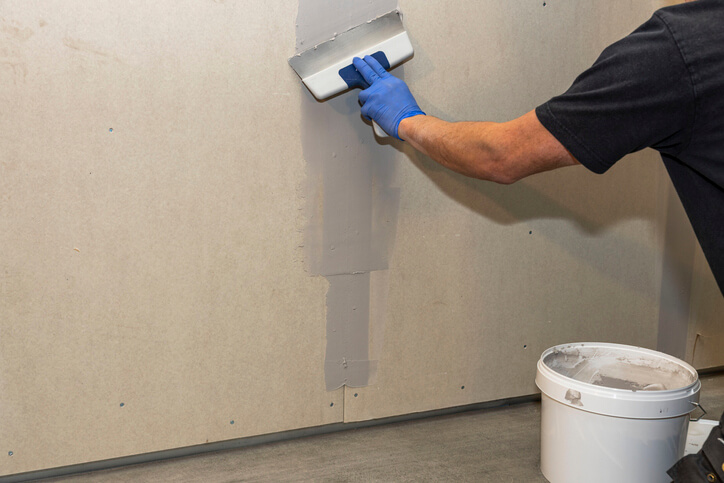
The crowning touch? A thorough sanding. Once the applied compound dries, sanding ensures the surface is silky smooth, primed, and ready for paint. By sunset, what was once a bare frame is now a canvas, transformed and ready for the following stages of interior design.
Are you interested in our world-class home renovation diploma?
Contact NATS for more information.

Buying a home is one of the most significant investments anyone can make in their lifetime. With so much at stake, there’s little, if any, room for error. Yet, the excitement of reaching such a crucial milestone can prevent home buyers from spotting defects in a home they’re interested in buying. This is where your training as a home inspector becomes crucial.
Far from being just another step in the process, a thorough home inspection can lead to substantial savings for the home buyer. This blog post highlights ways to save money for home buyers after your home inspection training.
Identification and Prevention of Issues
One of the primary duties of a home inspector after home inspector training is to uncover issues that may take time to be visible. These can range from faulty wiring to plumbing issues to structural problems. Catching these issues before finalizing the purchase can save the buyer from expensive repairs.
Beyond this, a comprehensive home inspection isn’t just about finding current issues; it’s also about helping homeowners prevent future problems. Inspectors are often required to provide tips on maintaining a home, which can save homeowners significant amounts in the long run. As an inspector, you might, for instance, need to advise home buyers on ensuring proper water drainage to protect the foundation.

If done correctly, newly installed features can save homeowners on energy bills. For instance, poorly sealed windows can leak heat in winter and cool air in summer. As an inspector, checking these installations can help save the buyer utility bills.
Home Inspection Training Provides Financial Leverage and Savings
Another effective way to save money for home buyers is by offering them negotiation leverage with detailed inspection reports. While it might look like it to potential buyers, there’s no such thing as a flawless house. Buyers can negotiate the purchase price more effectively with a detailed home inspection report. If the inspection reveals significant problems, buyers can request that the seller either make the repairs or reduce the price to compensate for the upcoming expenses.

Just as our home inspector courses emphasize, always remember to provide an estimation of the lifespan of the home’s major components, such as roofs, furnaces, or air conditioning units. With this knowledge, buyers can budget for future replacements or even factor them into their initial offer. Some insurance companies might also offer lower premiums for homes that have undergone a recent, thorough inspection, especially if potential hazards have been identified and rectified.
Avoidance of Bad Investments and Safety Assurance
In extreme cases, a home inspection might reveal that a property has so many issues it’s a potential money pit. Recognizing and pointing this out to buyers can save them from making a bad investment altogether.
It’s hard to put a price on safety. One thing you should always look out for as a home inspector when evaluating homes is potential safety risks, like radon, carbon monoxide, or mould. Spotting and addressing these issues early can avoid health-related costs and offer peace of mind to the homebuyer.
Are you interested in our world-class home inspection program?
Contact NATS for more information.

Cabinet making is a skill and an art. Whether you’ve just finished a professional course or are embarking on a DIY journey, crafting a cabinet with precision and care can be immensely satisfying. However, even after creating a beautiful piece, installation’s another critical step. And this is where many enthusiastic cabinet makers stumble.
Here are some common installation mistakes made that could be avoided by those who completed the cabinet making courses.
Failing to Check Measurements and Levelness
One of the golden rules in woodworking and cabinet installation is “Measure twice, cut once.” It’s easy to get excited and rush through measurements, but even a few millimeters off can spell disaster for your installation. Incorrect measurements can lead to gaps, misalignment, and a cabinet that doesn’t fit or function as intended. As it is one of the fundamentals discussed in the cabinet making training, always double or triple-check your measurements before making any cuts or installations.
A flawlessly crafted cabinet can be ruined by uneven installation. Cabinets that are not level can lead to uneven doors, difficulty opening or closing, or even long-term structural issues. Always use a trusted level system during installation and make necessary adjustments to ensure your cabinets sit perfectly as required.

Overlooking Wall Studs and Ignoring Spaces or Fillers
Mounting cabinets directly on drywall without anchoring them to studs is a recipe for disaster. Over time, the weight can cause the cabinets to pull away from the wall, leading to damage and potential injury. Always locate and mark the wall studs and ensure that your cabinet screws penetrate these studs for a secure installation.
Beyond this, every room has quirks, and the walls must not be straight. Spacers or fillers are essential to address these irregularities. They help ensure that your cabinet fits perfectly and has a professional finish. Ignoring them can lead to unsightly gaps or cabinets that jet out in odd ways.
Forgetting the Toe Kick as Taught in the Cabinet Making Courses
The toe kick is that recessed space at the bottom of floor cabinets, and it’s not just for aesthetics, as most cabinet making courses emphasize. It provides a comfortable space for your feet as you stand at the counter. It might seem like a minor detail, but omitting a toe kick can make your kitchen or workspace uncomfortable and can detract from the overall finished look.
Using Inadequate Hardware and Neglecting the Finish
It’s not just about the wood. Screws, brackets, and other hardware are crucial in securing your cabinet. Skimping on or using the wrong hardware can lead to wobbly cabinets or, worse, cabinets that fall apart after a short period. Invest in high-quality hardware that’s designed explicitly for cabinetry.
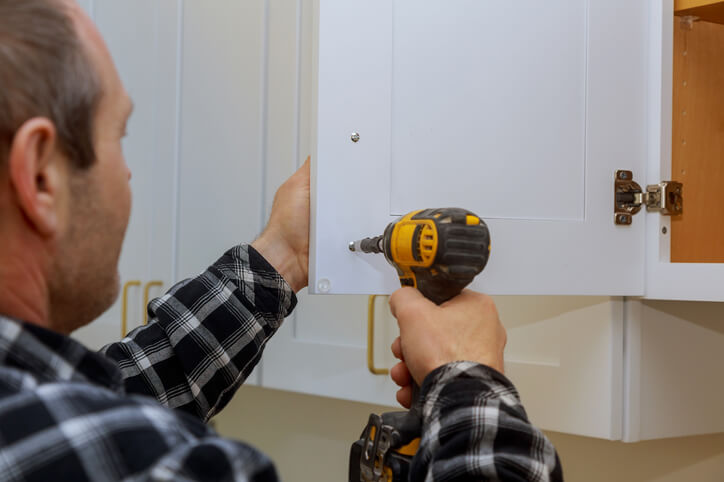
Also, after installing your cabinet, finishing it with sealants or paints that protect the wood and enhance its appearance is essential. This step will make your cabinet look polished and professional and protect against moisture, stains, and everyday wear and tear.
Are you interested in a cabinet making diploma?
Contact NATS for more information.