Gas Tungsten Arc Welding (GTAW)
Build foundational Gas Tungsten Arc Welding skills through instructor-led classroom learning, demonstrations, and supervised welding shop practice.
Your TIG Welding Training at a Glance
Get an introduction to GTAW through technical instruction, instructor demonstrations, and extensive supervised welding practice.
Total Hours
A focused introductory workshop covering GTAW theory and practical skills.
Practical Hours
Supervised practical welding shop training.
Theory Hours
Theory, technical instruction, and instructor demonstrations.
In-Person
Classroom learning combined with welding shop training.
Beginner Level
No previous welding experience is required.
Locations
Brampton, Burlington and London.
Build Practical TIG Welding Skills
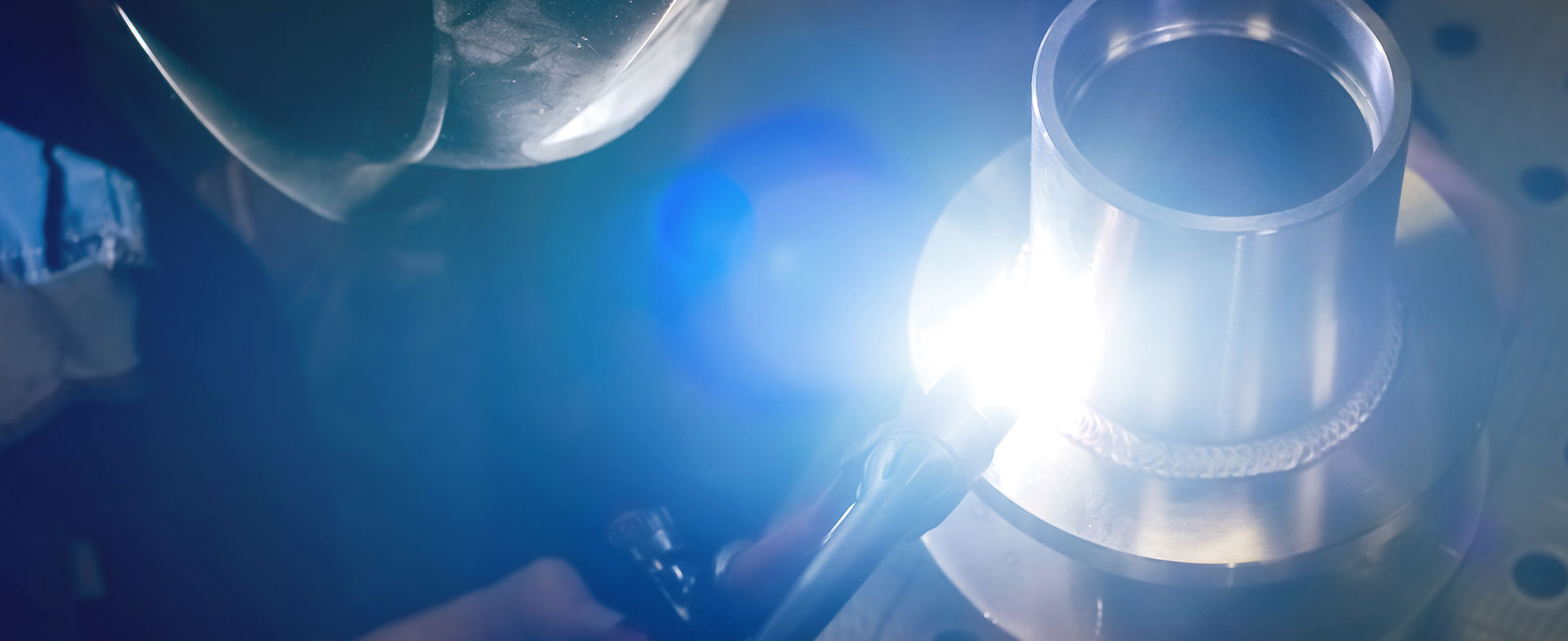
Gas Tungsten Arc Welding (GTAW), commonly known as TIG welding, is a welding process that uses a non-consumable tungsten electrode to produce the welding arc.
During this 80-hour workshop, students learn through classroom instruction, instructor demonstrations, and supervised shop practice.
Training introduces students to safe work procedures, GTAW equipment setup, tungsten preparation, shielding gas use, filler metal selection, material preparation, welding technique, basic visual inspection, and welding symbols.
Training emphasizes flat and horizontal welding on mild steel, with introductory stainless steel, aluminum, vertical, and overhead exercises as equipment availability and student readiness permit.
- GTAW equipment and operation
- Welding safety
- Welding circuit
- AC and DC
- Tungsten preparation
- Shielding gas use
- Filler metal selection
- Material preparation
- Welding technique
- Basic weld inspection
- Welding symbols
- Fabrication drawings
Understand How TIG Welding Works
Students learn the core components of Gas Tungsten Arc Welding and how current, tungsten, shielding gas, filler metal, and technique work together during the welding process.
Understand the GTAW Welding Circuit
Learn the basic relationship between the welding power source, tungsten electrode, welding torch, workpiece, and electrical circuit.
Learn the Use of AC and DC
Students are introduced to the use of alternating current and direct current in assigned GTAW exercises.
Prepare Tungsten Electrodes
Learn how tungsten electrodes are selected and prepared using manufacturer guidance and instructor-provided procedures.
What You'll Be Able to Do
Upon successful completion, students should be able to demonstrate foundational GTAW knowledge, safe equipment operation, material preparation, welding technique, and introductory weld evaluation.
Safety & Equipment
- Identify common welding hazards.
- Apply appropriate safety controls.
- Inspect GTAW equipment before use.
- Set up GTAW equipment safely.
- Operate GTAW equipment safely.
- Shut down GTAW equipment correctly.
GTAW Process Knowledge
- Explain the basic GTAW process.
- Explain the welding circuit.
- Explain the use of AC and DC.
- Select tungsten electrodes for assigned exercises.
- Prepare tungsten electrodes using approved procedures.
Setup & Welding Technique
- Select shielding gas.
- Select filler metals.
- Select settings appropriate to assigned exercises.
- Clean materials.
- Prepare basic welded joints.
- Coordinate torch movement and filler metal addition.
- Coordinate current control.
- Control arc length.
- Control torch angle.
- Control travel speed.
- Control heat input.
Welding & Interpretation
- Produce basic fillet welds.
- Produce basic groove welds.
- Weld in flat positions.
- Weld in horizontal positions.
- Practise introductory stainless steel welding.
- Practise introductory aluminum welding.
- Practise introductory vertical welding under supervision.
- Practise introductory overhead welding under supervision.
- Identify common visible weld defects.
- Explain possible causes of visible defects.
- Interpret basic welding symbols.
- Read simple fabrication drawings.
What You'll Practise in the Welding Shop
Apply GTAW concepts through instructor-supervised exercises in a practical welding environment.
Equipment Setup
Inspect, prepare, operate, and shut down GTAW equipment safely.
Safety & PPE
Apply safe work practices and use appropriate personal protective equipment.
Tungsten Preparation
Select and prepare tungsten electrodes using instructor procedures and manufacturer guidance.
Shielding Gas
Select shielding gas appropriate to assigned welding exercises.
Filler Metal
Select filler metals appropriate to the assigned material and exercise.
Material Preparation
Clean materials and prepare basic welded joints.
Torch & Filler Coordination
Coordinate torch movement, filler metal addition, and current control.
Arc Control
Practise controlling arc length, torch angle, travel speed, and heat input.
Flat Welding
Develop foundational GTAW technique in the flat position.
Horizontal Welding
Build experience completing assigned horizontal-position exercises.
Fillet & Groove Welds
Practise producing basic fillet and groove welds.
Stainless & Aluminum
Practise introductory welding on stainless steel and aluminum as equipment availability permits.
More Time Welding. More Time Building Skills.
Move from understanding GTAW concepts to applying them through extensive supervised welding shop practice.
Theory Hours
Theory and instructor demonstrations.
Practical Hours
Supervised practical welding shop training.
75% of Instructional Time is Supervised Practical Training
Of the 80 instructional hours, 60 hours are dedicated to supervised practical training.
From Equipment Setup to Finished Weld
Students learn how tungsten preparation, shielding gas, filler metal, current control, and welding technique work together during TIG welding.
Inspect & Prepare
Inspect equipment, PPE, materials, and the work area.
Prepare the Tungsten
Select and prepare the tungsten electrode for the assigned exercise.
Select Gas & Filler
Select the shielding gas and filler metal appropriate to the exercise.
Set Up the Machine
Configure equipment and select appropriate current and settings.
Prepare the Joint
Clean materials and prepare the required basic welded joint.
Establish Technique
Coordinate torch movement, filler addition, arc length, travel speed, and heat input.
Weld & Inspect
Complete assigned welding exercises and review the finished weld for visible defects.
Build Skills Across Common Welding Positions
Flat
Develop foundational GTAW technique while welding in the flat position.
Horizontal
Practise controlling the weld during assigned horizontal exercises.
Vertical
Practise introductory vertical welding under supervision as readiness permits.
Overhead
Practise introductory overhead welding under supervision as readiness permits.
Build Foundational TIG Skills on Different Materials
Training focuses primarily on mild steel while introducing students to additional TIG welding applications as equipment availability and student readiness permit.
Mild Steel
Flat and horizontal GTAW training primarily focuses on mild steel.
Stainless Steel
Students practise introductory stainless steel welding as equipment availability and student readiness permit.
Aluminum
Students practise introductory aluminum welding as equipment availability and student readiness permit.
Learn to Recognize What a Good Weld Looks Like
Students are introduced to basic visual weld inspection and learn to identify common visible weld defects and explain possible causes.
- Weld appearance
- Bead consistency
- Weld profile
- Common visible weld defects
- Possible causes of defects
Learn the Language of Welding
Students are introduced to basic technical information used to communicate welding requirements.
- Basic welding symbols
- Common welding terminology
- Simple fabrication drawings
- Joint identification
- Weld location
- Weld type information
Course Completion and Welder Qualification
Understand the difference between completing TIG welding training and achieving formal welder qualification.
Certificate of Completion
Students who meet the school's approved completion requirements may receive a Certificate of Completion from North American Trade Schools.
What Course Completion Means
This workshop provides introductory GTAW skills training and preparation.
- Completion of the approved NATS course requirements.
- Introductory GTAW knowledge and practical skills training.
- Supervised welding shop experience.
- Completion of the learning outcomes described in the workshop.
What Course Completion Does Not Mean
Course completion is separate from formal welder qualification.
- Course completion does not automatically confer formal welder qualification.
- Formal qualification testing follows separate requirements.
- Applicable standards and testing organizations establish qualification requirements.
The workshop introduces students to the purpose of welder qualification testing.
Formal welder qualification testing is separate from course completion and must follow the requirements of the applicable standard and testing organization.
Is This TIG Welding Workshop Right for You?
Beginners
People interested in learning TIG welding with little or no previous experience.
Skilled-Trades Explorers
Individuals exploring skilled trades and looking for practical welding experience.
Workers
People looking for introductory experience with Gas Tungsten Arc Welding.
Tradespeople
Individuals looking to expand their understanding of GTAW equipment and techniques.
Hands-On Learners
People who want substantial supervised welding-shop practice.
No Experience Required
The workshop is designed at an introductory level.
80 Hours of Instructor-Led Training
The workshop includes 80 instructional hours, excluding breaks.
8-Hour Sessions
A concentrated format spread across ten training sessions.
4-Hour Sessions
A shorter-session format spread across twenty training sessions.
Train at a NATS Campus
Ask about TIG Welding workshop availability at participating North American Trade Schools locations.
Brampton
Learn Gas Tungsten Arc Welding through technical instruction, instructor demonstrations, and supervised practical training.
Ask About Brampton ClassesBurlington
Build foundational TIG welding skills through classroom learning and instructor-supervised welding shop exercises.
Ask About Burlington ClassesLondon
Explore GTAW through an introductory workshop combining theory, demonstrations, and practical welding training.
Ask About London ClassesTIG Welding Skills Covered in the Workshop
GTAW Fundamentals
- Gas Tungsten Arc Welding principles
- Welding circuit
- AC and DC
- Welding safety
- Welding hazards
Equipment & Setup
- Equipment inspection
- Equipment setup
- Equipment shutdown
- Tungsten selection
- Tungsten preparation
- Shielding gas selection
- Filler metal selection
- Machine settings
Welding Technique
- Material cleaning
- Joint preparation
- Torch movement
- Filler metal addition
- Current control
- Arc length
- Torch angle
- Travel speed
- Heat input
Weld Types & Positions
- Basic fillet welds
- Basic groove welds
- Flat welding
- Horizontal welding
- Introductory vertical welding
- Introductory overhead welding
Materials
- Mild steel
- Introductory stainless steel
- Introductory aluminum
Inspection & Qualification
- Basic visual inspection
- Visible weld defects
- Possible defect causes
- Welding symbols
- Simple fabrication drawings
- Course completion vs. formal welder qualification
Frequently Asked Questions
What is Gas Tungsten Arc Welding?
Gas Tungsten Arc Welding, or GTAW, is commonly known as TIG welding. The process uses a non-consumable tungsten electrode to produce the welding arc.
What does GTAW stand for?
GTAW stands for Gas Tungsten Arc Welding.
Is GTAW the same as TIG welding?
GTAW is commonly known as TIG welding. The workshop introduces students to GTAW equipment, tungsten preparation, shielding gas, filler metal, and practical welding techniques.
How long is the NATS TIG Welding workshop?
The workshop consists of 80 instructional hours, excluding breaks.
How much of the TIG Welding workshop is hands-on?
The workshop includes 60 hours of supervised practical training and 20 hours of theory and instructor demonstrations. This means 75% of instructional hours are allocated to supervised practical training.
Do I need previous welding experience?
No. The workshop is introductory and no previous welding experience is required.
Will I learn how to prepare tungsten electrodes?
Yes. Students learn to select and prepare tungsten electrodes using manufacturer guidance and instructor-provided procedures.
Will I learn about AC and DC TIG welding?
Students are introduced to the basic GTAW welding circuit and the use of AC and DC as part of the course learning outcomes.
Will I learn how to use filler metal?
Yes. Students learn to select filler metals for assigned exercises and practise coordinating filler metal addition with torch movement and current control.
Will I weld stainless steel and aluminum?
Training focuses primarily on mild steel. Students also practise introductory welding on stainless steel and aluminum as equipment availability and student readiness permit.
What welding positions will I practise?
Training emphasizes flat and horizontal welding. Students may also practise introductory vertical and overhead welding under supervision as readiness permits.
Does the workshop cover welding symbols?
Yes. Students are introduced to basic welding symbols and simple fabrication drawings.
Does completing the TIG Welding workshop make me a qualified welder?
Course completion and formal welder qualification are separate. Students learn about the difference between course completion and formal welder qualification.
Where is the TIG Welding workshop offered?
The supplied course information identifies Brampton, Burlington, and London as NATS locations for the TIG Welding workshop. Contact NATS to confirm current campus availability and upcoming class dates.
Ready to Start Welding?
Build foundational Gas Tungsten Arc Welding skills through 80 hours of instructor-led classroom, demonstration, and practical shop training.
With 60 hours dedicated to supervised practical training, this introductory TIG Welding workshop gives students substantial time to develop GTAW skills in a welding shop environment.
Brampton • Burlington • London
| Flux Core Welding | |||
|---|---|---|---|
| START DATE | DAYS | TIMING | STATUS |
| Nov 13, 2026 | M, T, W, T |
6:00 PM - 10:00 PM (Evening) | Open |
| Dec 11, 2026 | M, T, W, T |
6:00 PM - 10:00 PM (Evening) | Open |
| Jan 15, 2027 | M, T, W, T |
6:00 PM - 10:00 PM (Evening) | Open |